
 2
2
2
2


 Senior Friendly2027 Departures AddedFamily Vacation
 New
New Senior Friendly2027 Departures Added
 Best Seller
 Most Popular
 Senior Friendly2027 Departures AddedFamily VacationNew Release
 Senior Friendly2027 Departures AddedBest SellerFamily VacationSenior Friendly2027 Departures AddedFamily VacationNew
 Best SellerFamily VacationSenior Friendly
 Best Seller2027 Departures AddedSenior FriendlySenior Friendly2027 Departures AddedBest SellerMost PopularSenior Friendly2027 Departures AddedFamily VacationNew Release
 Best Seller2027 Departures AddedFamily VacationSenior Friendly
 Best Seller2027 Departures AddedFamily VacationSenior FriendlySenior Friendly2027 Departures AddedBest SellerFamily Vacation
2
2
Best Seller2027 Departures AddedFamily VacationSenior FriendlySenior Friendly2027 Departures AddedBest SellerFamily Vacation
2
2
 Luxury Service



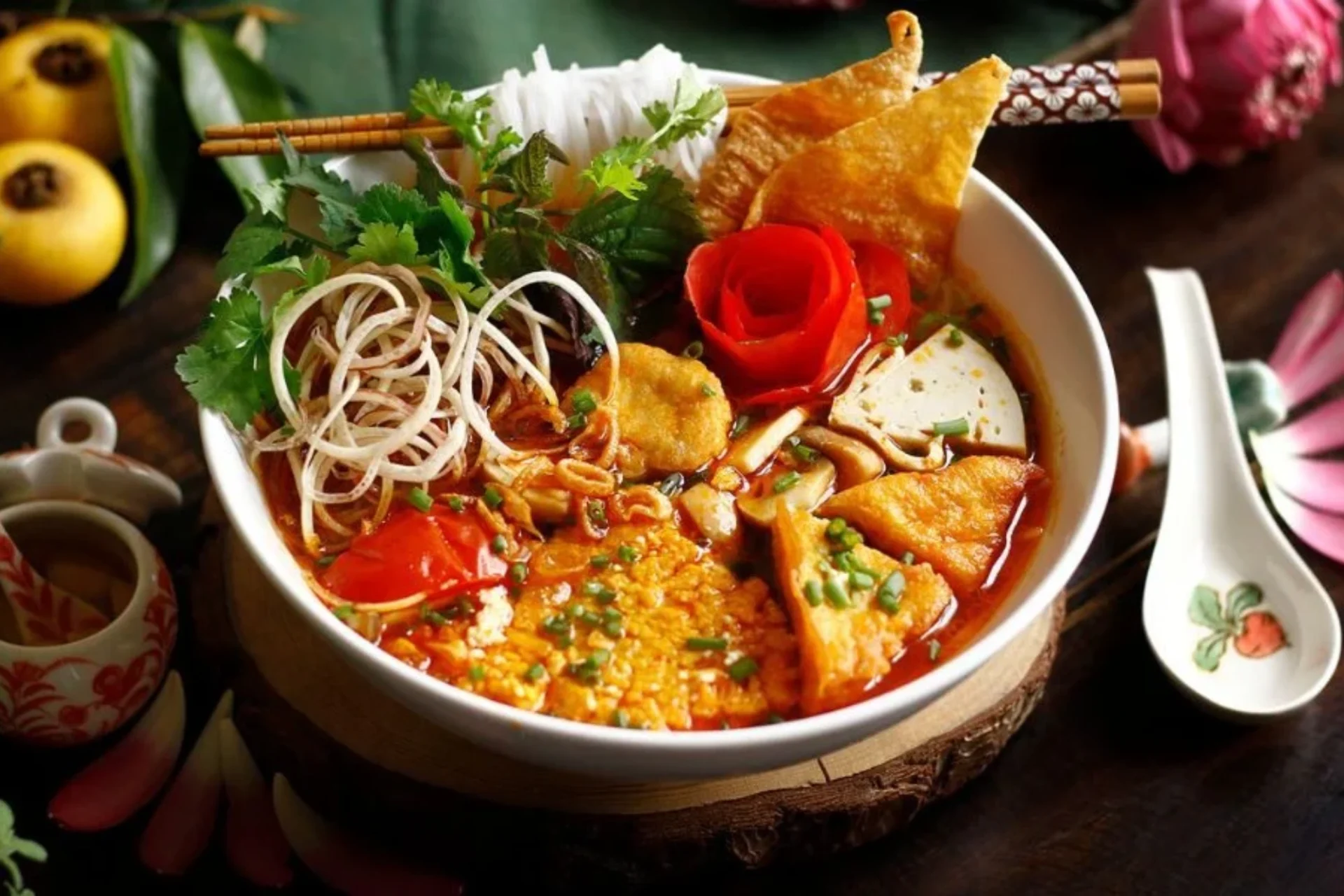
Vietnamese food soup is best understood as a broad group of Vietnamese dishes built around broth, noodles, meat or seafood, and fresh herbs. Vietnamese noodle soup is especially important because it appears across the country, from northern pho to spicy bun bo Hue and southern hu tieu. Each bowl reflects local ingredients, regional tastes, and everyday eating habits.
This guide explores seven must-try noodle dishes, explains what makes their broths and noodles different, introduces common Vietnamese pho spices, and shows how locals enjoy these dishes as breakfast, street food, and everyday meals.
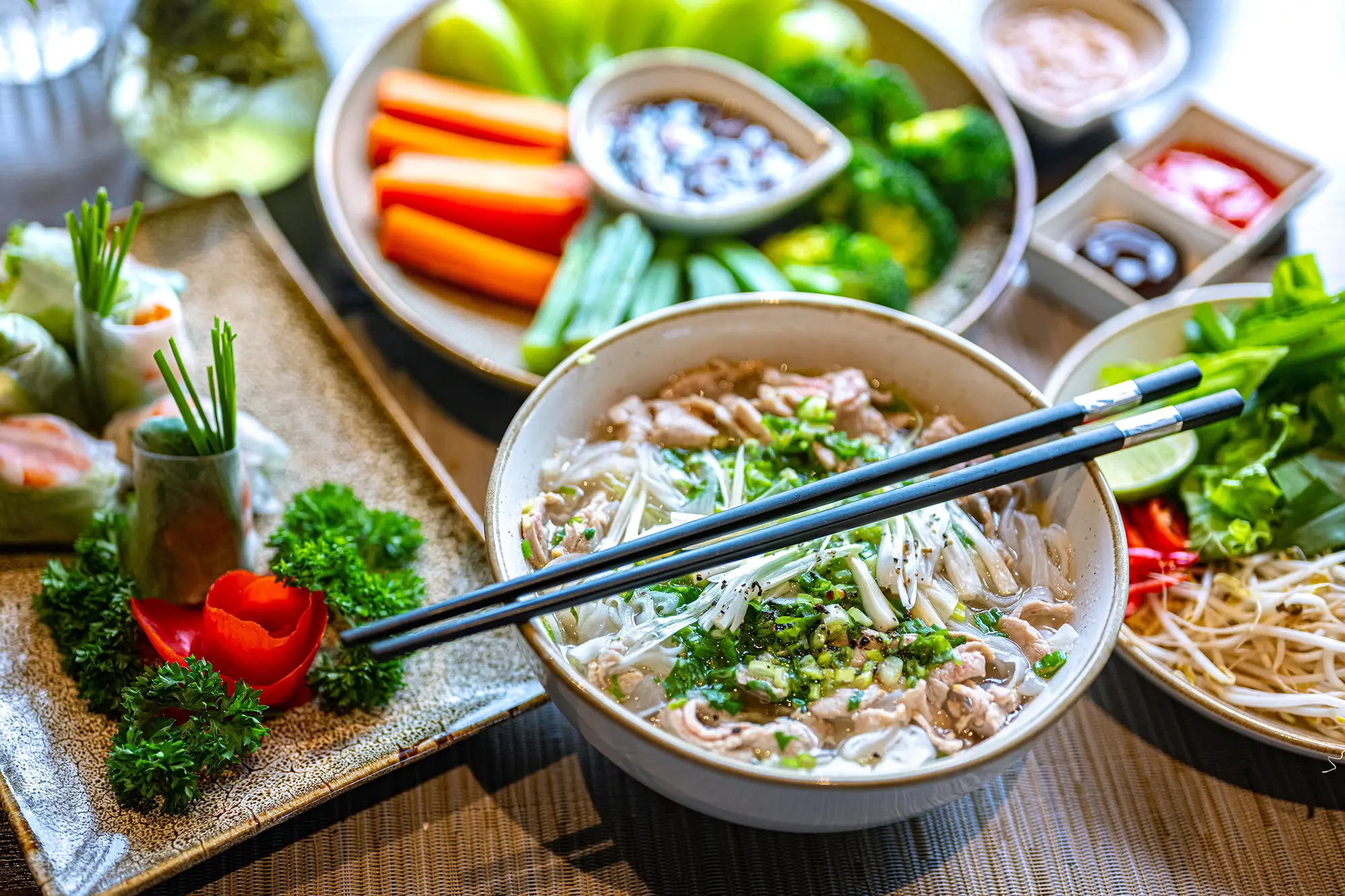
What Is Vietnamese Food Soup?
Vietnamese food soup generally refers to the country’s beloved noodle soups. These traditional dishes combine a rich, slow-simmered broth, rice or egg noodles, fresh herbs, and high-quality proteins like beef, chicken, or seafood. They serve as staple meals enjoyed for breakfast, lunch, or dinner across all regions of Vietnam.
Each region of Vietnam has its own unique way of combining ingredients. The North favors clear, delicate broths that highlight the natural flavor of the meat. Meanwhile, the Central region loves bold, spicy, and complex flavors. The South often incorporates a touch of sweetness and serves dishes with a massive abundance of fresh vegetables.
7 Vietnamese Noodle Soups You Should Try
Vietnam’s noodle culture extends far beyond pho. These seven dishes offer a useful introduction to the different noodles, broths, ingredients, and regional flavors you can encounter during a trip.
1. Pho – Vietnam’s Most Famous Noodle Soup
Pho is Vietnam’s best-known noodle soup and one of the country’s most recognizable culinary exports. Pho typically combines flat rice noodles with a clear broth and sliced beef or chicken, then finishes the bowl with herbs and fresh seasonings.
Pho has strong connections with northern Vietnam, particularly Hanoi and Nam Dinh. Nam Dinh as an important historical home of pho, while Hanoi became one of its most influential culinary centers. Pho also developed differently after spreading south, with southern versions generally offering a sweeter broth and a broader range of herbs and condiments.
For travelers, this regional difference is worth noticing. A bowl of pho in Hanoi may feel relatively restrained and broth-focused, while a southern bowl can arrive with a larger plate of herbs and additional sauces.
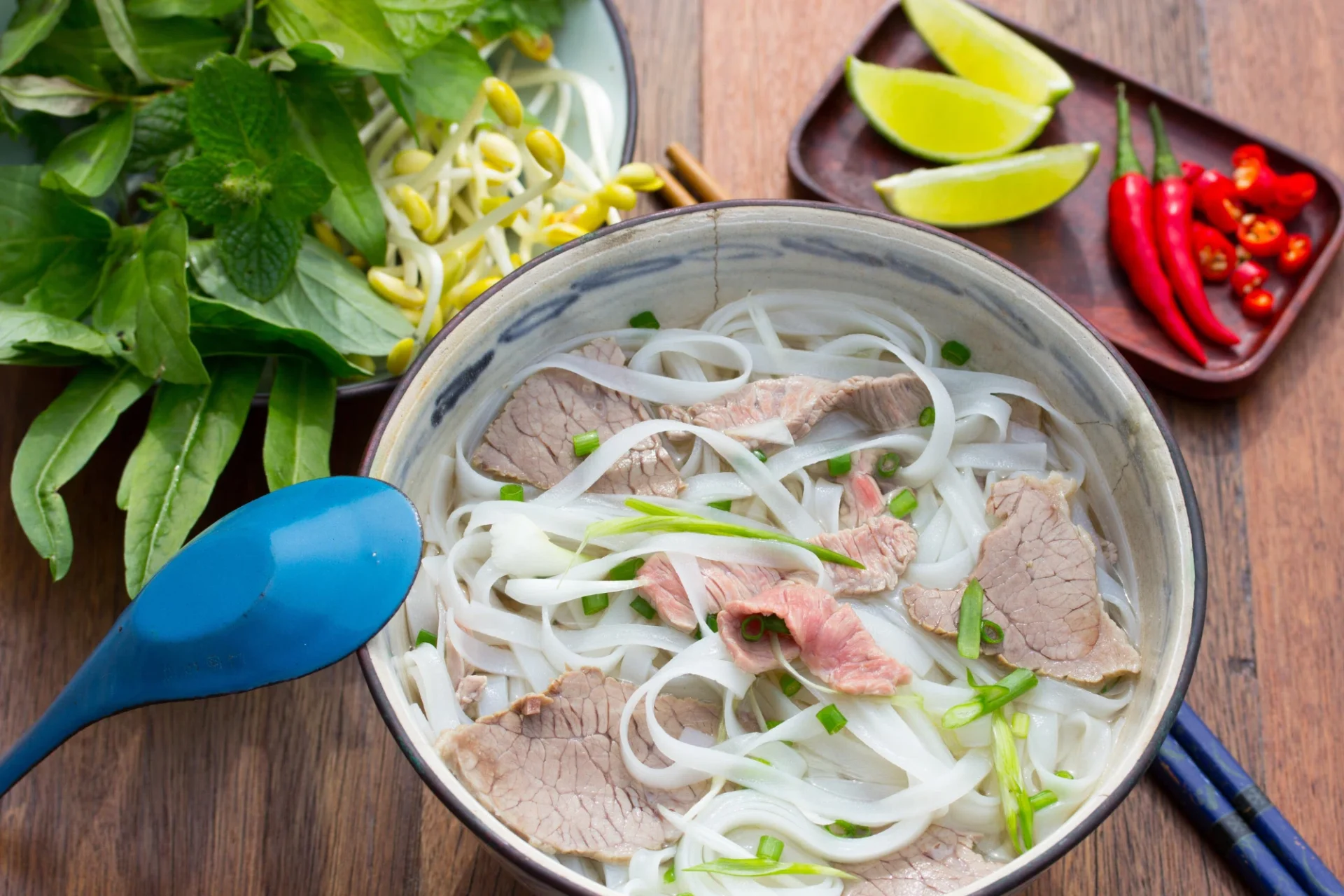
2. Bun Bo Hue – A Spicy Noodle Soup from Central Vietnam
Bun bo Hue comes from Hue in Central Vietnam, a city known for its distinctive culinary traditions and former imperial heritage. Unlike the delicate profile associated with northern pho, bun bo Hue is known for a richer, spicier, and more aromatic broth.
The dish uses round rice vermicelli and commonly includes beef, pork-based ingredients, lemongrass, fermented shrimp paste, chili, and fresh herbs.Its flavor as rich and complex, with variations in toppings depending on the restaurant and location.
For visitors who want to understand Central Vietnamese cuisine, bun bo Hue is an important contrast to pho. It demonstrates how the same basic idea-a bowl of noodles and broth-can become much more intense through different ingredients and seasonings.
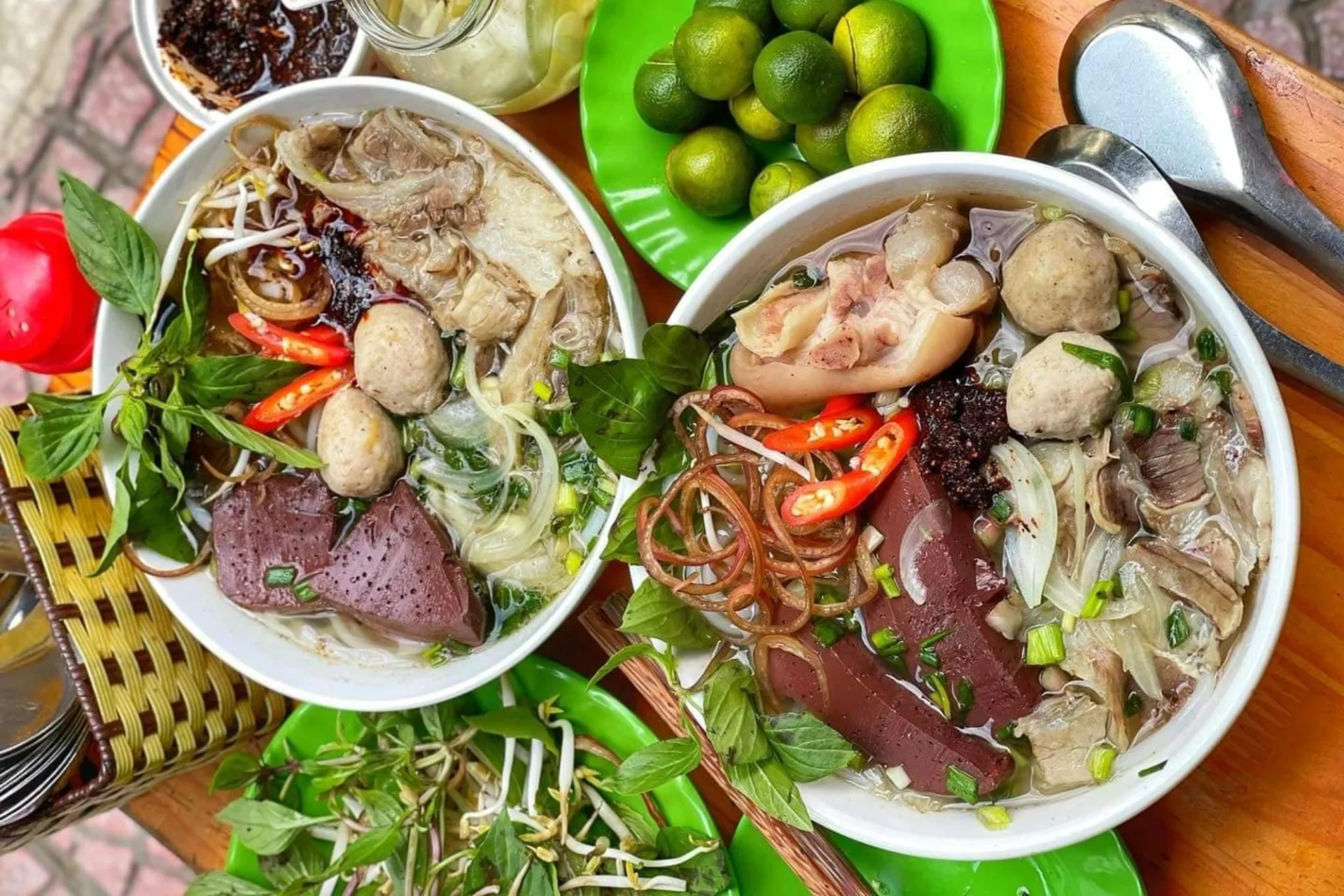
3. Cao Lau – Hoi An’s Distinctive Noodle Dish
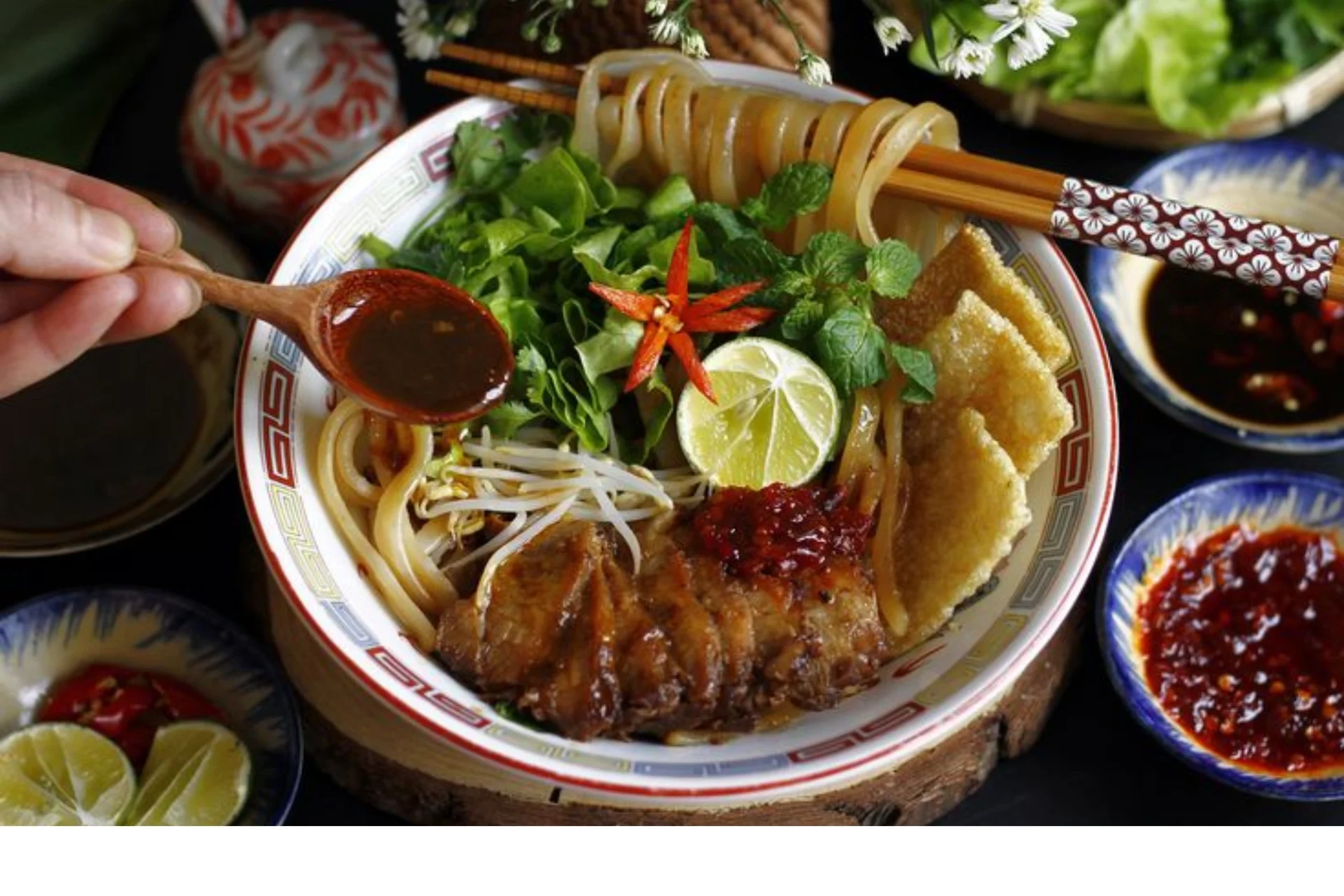
Cao lau is closely associated with Hoi An and is different from the more broth-heavy dishes on this list. It contains relatively little liquid, so it is better understood as a distinctive noodle dish rather than a conventional noodle soup.
The dish combines firm noodles with sliced pork, bean sprouts, fresh herbs, and crispy elements, finished with a small amount of broth or sauce. Hoi An’s local water and traditional preparation methods are often highlighted as part of what gives cao lau its characteristic noodle texture.
Its connection with Hoi An’s history is also significant. As a former trading port, Hoi An developed culinary influences through contact between Vietnamese and other Asian communities. Cao lau is therefore a useful example of how a local dish can reflect the history of the place where it developed.
4. Bun Rieu – Vietnamese Crab Noodle Soup
Bun rieu is a Vietnamese crab noodle soup recognized for its tomato-based broth and freshwater crab. The combination gives the dish a noticeably tangy profile that differs from the clear broth associated with pho.
A typical bowl can include thin rice vermicelli, crab-based riêu, tomatoes, tofu, herbs, and other regional toppings. Some versions also incorporate pork and additional ingredients, so the exact bowl can vary between restaurants and regions.
Among Vietnamese soup dishes, bun rieu is particularly useful for understanding how acidity can shape a broth. Instead of relying primarily on the deep, aromatic profile of a long-simmered meat broth, it builds its identity around the interaction of tomato, crab, herbs, and fermented seasonings.
5. Hu Tieu – A Southern Vietnamese Noodle Soup
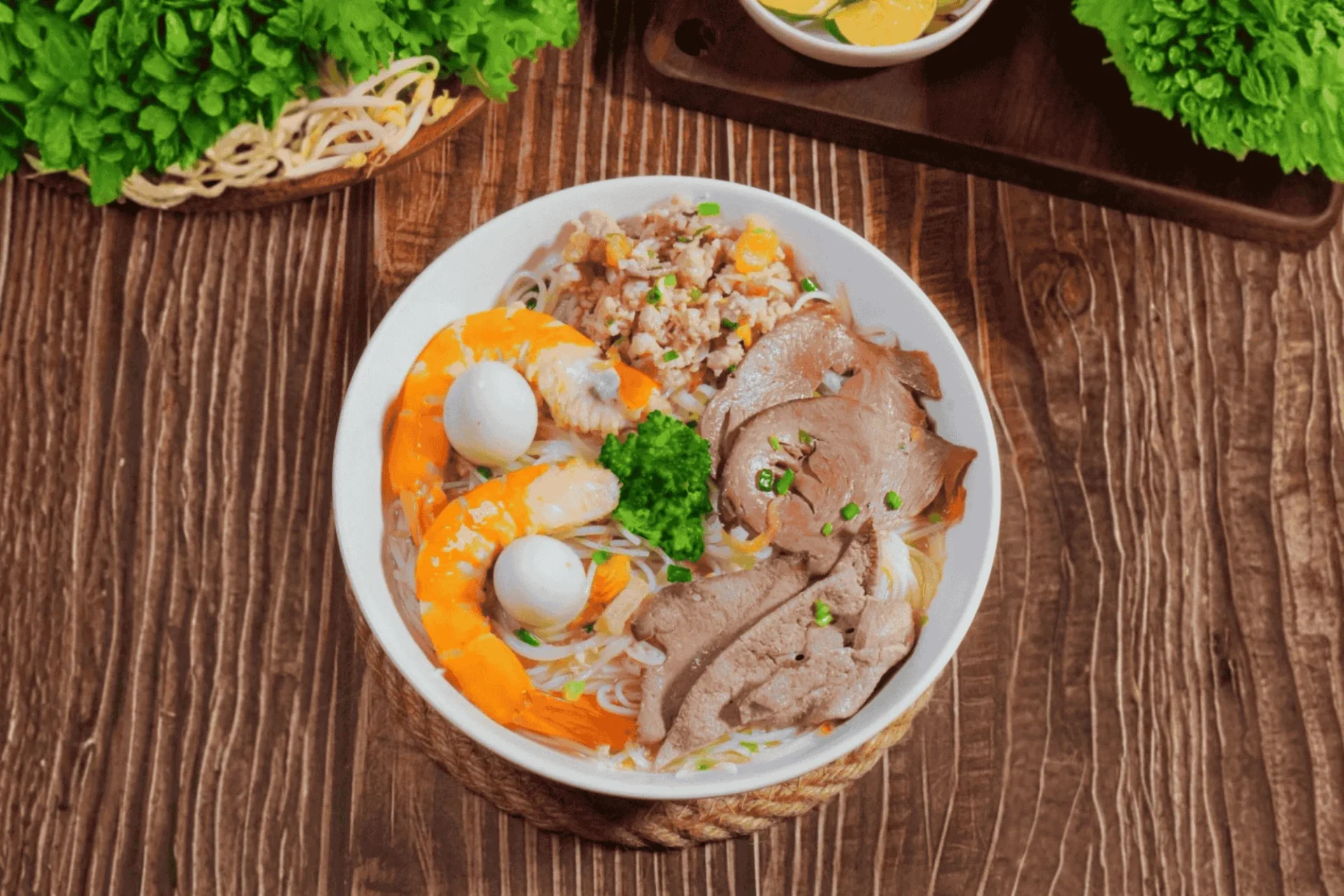
Hu tieu is strongly associated with Southern Vietnam, especially Ho Chi Minh City and the Mekong Delta. The dish can be served as a soup or in a dry version with the broth provided separately, making it one of the more flexible Vietnamese noodle dishes.
The broth is commonly prepared with pork bones and may include dried seafood such as squid and shrimp. Typical toppings can include shrimp, pork, eggs, and other ingredients depending on the local version.
The result is generally a lighter, slightly sweet and savory bowl. For travelers exploring southern cuisine, hu tieu demonstrates how seafood, pork, noodles, and vegetables can be combined without producing the heavier flavor profile associated with some Central Vietnamese dishes.
6. Mi Quang – A Turmeric-Tinted Noodle Dish from Quang Nam
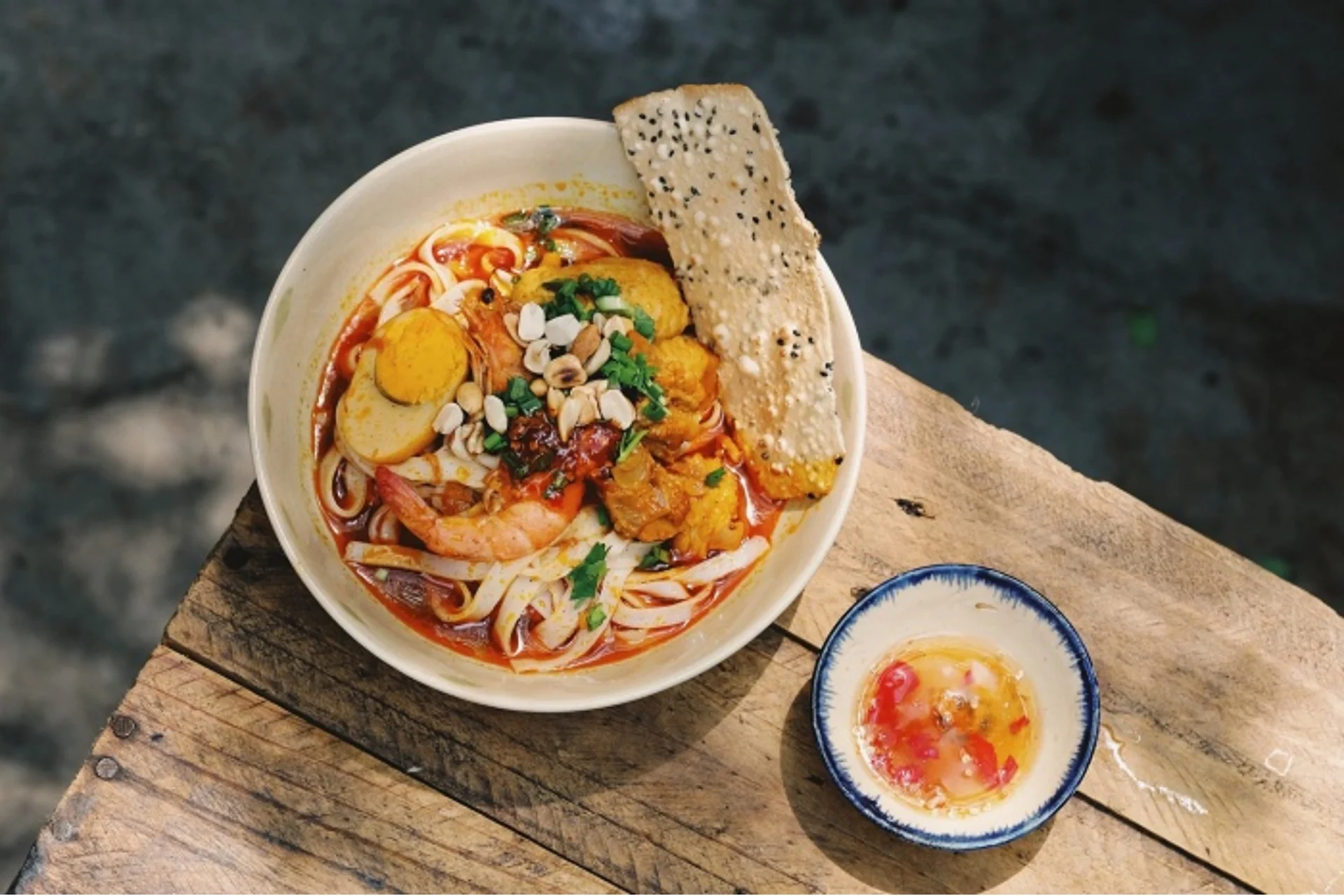
Mi Quang comes from Quang Nam in Central Vietnam and is another dish that should not be confused with a conventional soup. It uses a small amount of concentrated broth rather than filling the bowl with liquid, allowing the noodles and toppings to remain central.
The noodles are typically flat and can have a distinctive yellow color. Common toppings include pork, shrimp, chicken, herbs, peanuts, and other regional ingredients. The dish as being served with a small amount of rich broth alongside fresh vegetables and herbs.
Mi Quang is particularly interesting for travelers because it shows that Vietnamese noodle culture is not defined by soup alone. The relationship between noodles, broth, herbs, toppings, and texture changes from one region to another.
7. Bun Mam – A Bold Southern Vietnamese Noodle Soup
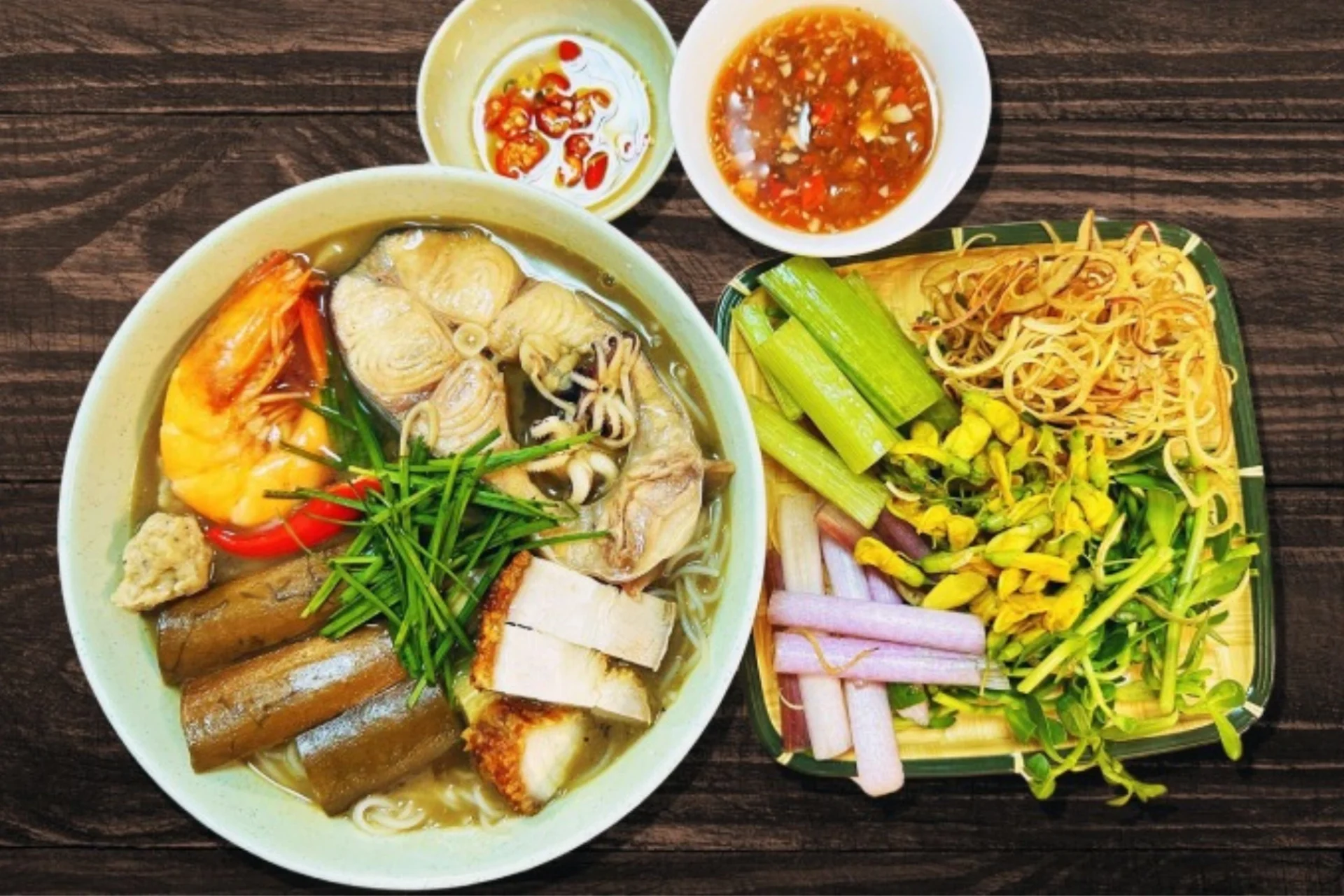
Bun mam is a Southern Vietnamese noodle soup known for its strong fermented-fish flavor. The use of fermented ingredients gives the broth an intensity that can be very different from the cleaner profile of pho.
The dish is commonly served with rice vermicelli, seafood or meat, and an assortment of fresh vegetables and herbs. Its bold seasoning makes it a good choice for travelers who want to explore flavors beyond the more internationally familiar Vietnamese dishes.
Bun mam also highlights an important characteristic of Southern cuisine: the use of fermented ingredients, fresh produce, seafood, and herbs to create complex bowls with contrasting flavors and textures.
What Makes Vietnamese Noodle Soups Different?
The variety of Vietnamese noodle soups comes from more than the type of noodle used. Four elements repeatedly shape the character of each dish.
The Broth
Broth is the foundation of many Vietnamese noodle soups, but there is no single formula. Depending on the dish, it can be built from beef or pork bones, chicken, seafood, crab, vegetables, tomatoes, or fermented ingredients.
Some broths are clear and delicate, while others are spicy, tangy, sweet, or strongly aromatic. This is one reason why trying several regional dishes provides a better understanding of Vietnamese cuisine than trying pho alone.
Fresh Herbs and Vegetables
Fresh ingredients are an important part of the eating experience. Depending on the dish, diners may receive herbs, bean sprouts, lettuce, banana flower, lime, chili, or other vegetables.
These ingredients are not simply decoration. Fresh herbs and vegetables add texture, aroma, acidity, and freshness, helping balance the richness or saltiness of the broth.
Noodles and Regional Ingredients
Vietnam uses several different noodle styles, including:
- Pho noodles: flat rice noodles used in pho.
- Bun: thin round rice vermicelli used in dishes such as bun bo Hue and bun rieu.
- Hu tieu noodles: thin noodles commonly used in Southern Vietnamese dishes.
- Mi Quang noodles: wider rice noodles associated with Quang Nam.
- Cao lau noodles: firm noodles with a distinctive texture associated with Hoi An.
The noodle itself can therefore provide important clues about a dish’s regional identity.
Balance of Flavors
Vietnamese noodle soups often combine several taste dimensions rather than relying on a single dominant flavor. A bowl may balance salty, sweet, sour, spicy, and aromatic elements.
Seasonings such as lime, chili, herbs, fish sauce, and fermented ingredients allow diners to adjust the final flavor at the table. Vietnam Tourism specifically notes that many Vietnamese noodle soups are seasoned to taste with lime, chili, and aromatic herbs.
Vietnamese Pho Spices: What Gives Pho Its Signature Flavor?
Pho’s distinctive aroma comes partly from its combination of broth ingredients and warm spices. The exact mixture is not universal, and recipes can vary by household, restaurant, and region.
Common Spices Used in Pho
Common Vietnamese pho spices and aromatics include:
- Star anise
- Cinnamon
- Cloves
- Coriander seeds
- Cardamom
- Ginger
- Onion
Not every recipe uses exactly the same combination. The proportions and preparation methods can change depending on whether the cook is preparing northern-style, southern-style, beef, or chicken pho.
How Pho Spices Shape the Broth
These spices contribute fragrance and depth rather than simply making the broth taste spicy. Their warm, aromatic notes complement the meat and bones used to create the broth.
The result is one of pho’s defining characteristics: a broth that is aromatic without depending on a heavy sauce or thick consistency. This also helps distinguish pho from other Vietnamese noodle soups that use chili, fermented seafood, tomato, or stronger seasoning as their main flavor drivers.
When Do Vietnamese People Eat Noodle Soup?
Noodle dishes are part of everyday eating in Vietnam, not just foods reserved for special occasions. Their role changes depending on the region, dish, restaurant, and individual eating habits.
Vietnamese Breakfast
Breakfast in Vietnam can be a substantial meal, and noodle soup is one common choice. Pho is particularly associated with breakfast in Hanoi, while bun bo Hue and hu tieu can also be eaten in the morning in their respective regions.
This means visitors should not assume that breakfast has to be a light meal. A hot bowl of noodles, broth, meat, herbs, and vegetables can be a normal way to start the day.
Street Food and Everyday Meals
Many noodle dishes are available at casual restaurants, local markets, and street-side eateries. The setting can be as important as the dish itself, because eating noodle soup often means watching the bowl being assembled and seeing how local diners season it. For travelers, this makes noodle soup an accessible way to experience everyday food culture rather than only formal dining.
Vietnamese Soup Dishes by Region
Vietnamese soup dishes are not one uniform category. The ingredients, noodle shapes, broth styles, and seasoning habits change as you travel through the country. Here is a quick overview of popular dishes:
| Region | Soup / Noodle Dish | Key Characteristic |
| Northern Vietnam | Pho | Clear, aromatic broth |
| Central Vietnam | Bun Bo Hue | Spicy, rich flavor |
| Central Vietnam | Mi Quang | Turmeric-tinted noodles, little broth |
| Central Vietnam | Cao Lau | Firm noodles, very little broth |
| Southern Vietnam | Hu Tieu | Light, sweet-savory broth |
| Southern Vietnam | Bun Mam | Strong fermented flavor |
How to Order and Eat Vietnamese Noodle Soup
For first-time visitors, ordering a bowl is usually straightforward. The exact process varies by restaurant, but this basic approach works in many casual noodle shops:
- Choose the noodle soup. Start with a familiar dish such as pho, or choose a regional specialty based on where you are traveling.
- Choose your protein or toppings. Some restaurants offer several options, while others serve a fixed combination.
- Check the accompanying herbs and vegetables. These may arrive separately so you can add them according to your preference.
- Taste the broth first. This lets you understand the intended flavor before adding additional seasonings.
- Add lime or chili if desired. Many Vietnamese noodle soups are designed to be adjusted at the table.
- A useful rule for first-time visitors is to taste the broth before adding anything. You can then decide whether you want more acidity, heat, or freshness from the accompanying seasonings.
Frequently Asked Questions About Vietnamese Food Soup
1. What Is the Traditional Food of Vietnam?
Pho is one of the country’s most internationally recognized dishes, but Vietnamese cuisine includes a much wider range of regional noodle dishes, rice dishes, street foods, seafood, and vegetables. Pho, bun bo Hue, bun rieu, hu tieu, and other specialties each reflect different local ingredients and culinary traditions. Exploring several regions gives travelers a more accurate picture of Vietnamese food than focusing on one national dish alone.
2. What Is a Typical Breakfast in Vietnam?
A typical Vietnamese breakfast can vary by region and personal preference. Noodle soups such as pho, bun bo Hue, and hu tieu are common breakfast choices, while other options include rice dishes, steamed rice rolls, and other local specialties.
In Hanoi, pho has a particularly strong association with the morning meal. Breakfast is therefore often more substantial than visitors might expect.
3. How to Avoid Stomach Issues in Vietnam?
Choose restaurants and food stalls that appear clean and busy, as high customer turnover generally means food is being prepared regularly. Prefer food that is thoroughly cooked and served hot, especially when you are unfamiliar with local ingredients. Drink treated or bottled water when you are uncertain about the local water supply, and wash your hands before eating. If you have dietary restrictions or food allergies, communicate them clearly before ordering.
Final Thoughts
Vietnamese noodle soup is more than a collection of popular dishes. Each bowl offers a practical introduction to the region where it was created, from the clear and aromatic character of northern pho to the spicy profile of bun bo Hue and the bold flavors of Southern specialties. Pho may be the best-known starting point, but it represents only one part of Vietnam’s diverse noodle culture.
Trying different noodle dishes also gives travelers a way to understand how local ingredients, breakfast habits, street food, and regional tastes shape everyday life. If food is an important part of your trip, exploring Vietnam through its regional noodle soups can make the journey more meaningful.
Planning a Vietnam trip? Explore Nicetrips Vietnam tours to discover local food, culture, and destinations with a carefully prepared itinerary and on-ground support.
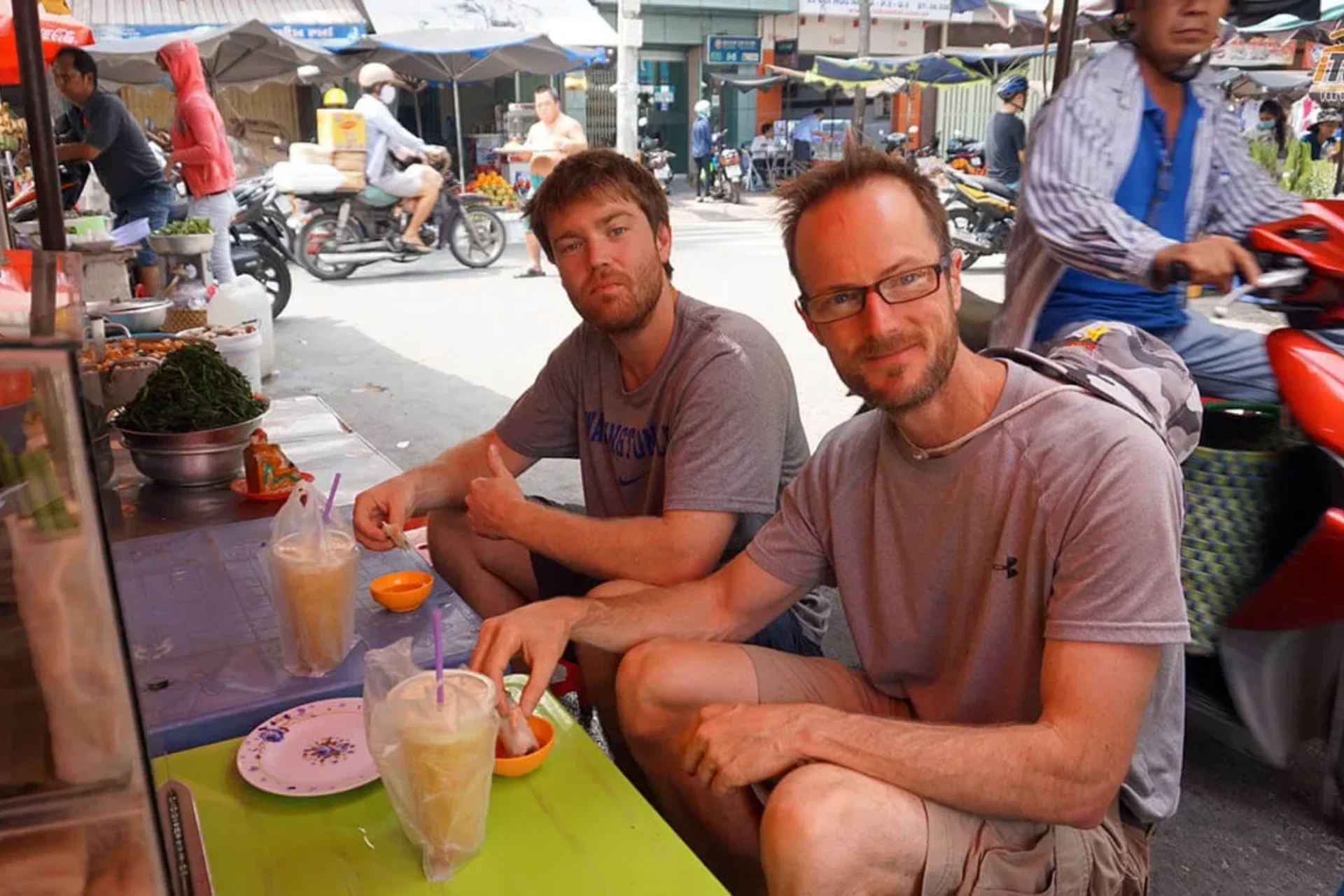
Planning a trip to Southeast Asia? Understanding a few essential facts about vietnam can transform your vacation from a standard tour into a deeply enriching experience. Vietnam is a country celebrated for its thousands of years of history, incredibly diverse regional cuisine, and welcoming locals.
However, navigating a new culture can feel overwhelming for first-time visitors. A great trip starts with peace of mind. This guide provides a clear overview of Vietnamese culture, traditions, and essential local etiquette. By learning these key insights, you will feel more confident, avoid cultural faux pas, and truly enjoy a seamlessly arranged journey from start to finish.
What Is Vietnam Best Known For?
Vietnam is known for its rich cultural heritage, 54 distinct ethnic groups, and the vibrant Tet Lunar New Year celebration. The country is globally recognized for its iconic Ao Dai traditional dress, diverse regional cuisine, and unique water puppetry art. Furthermore, travelers appreciate Vietnam for its strong family values, deep-rooted ancestor traditions, and spectacular UNESCO-recognized heritage sites set within beautiful natural landscapes.
| Vietnam is known for | Why it is interesting |
| Tet | Vietnam’s most important traditional celebration |
| Ao Dai | Iconic Vietnamese traditional dress |
| Vietnamese cuisine | Strong regional diversity |
| Water puppetry | Traditional Vietnamese performing art |
| 54 ethnic groups | Major source of cultural diversity |
15 Fascinating Facts About Vietnam
1. Vietnam Is Home to 54 Ethnic Groups
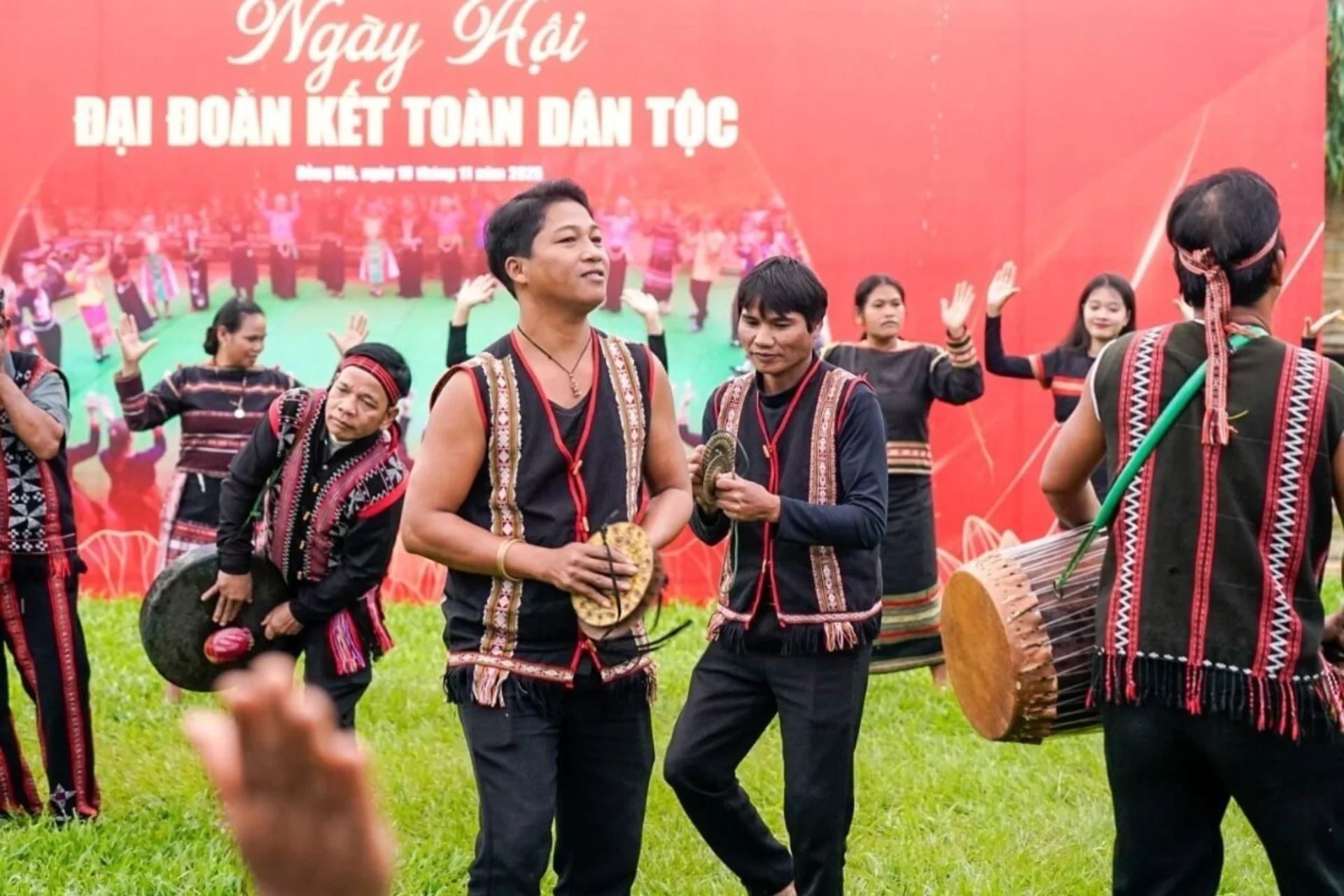
One of the most important facts about Vietnam is that the country is home to 54 officially recognized ethnic groups, each with its own cultural traditions. The Kinh people represent the majority of the population. However, the other 53 minority communities greatly contribute to the nation’s diversity in language, colorful traditional clothing, local festivals, and daily customs.
2. Tet Is Vietnam’s Most Important Traditional Celebration
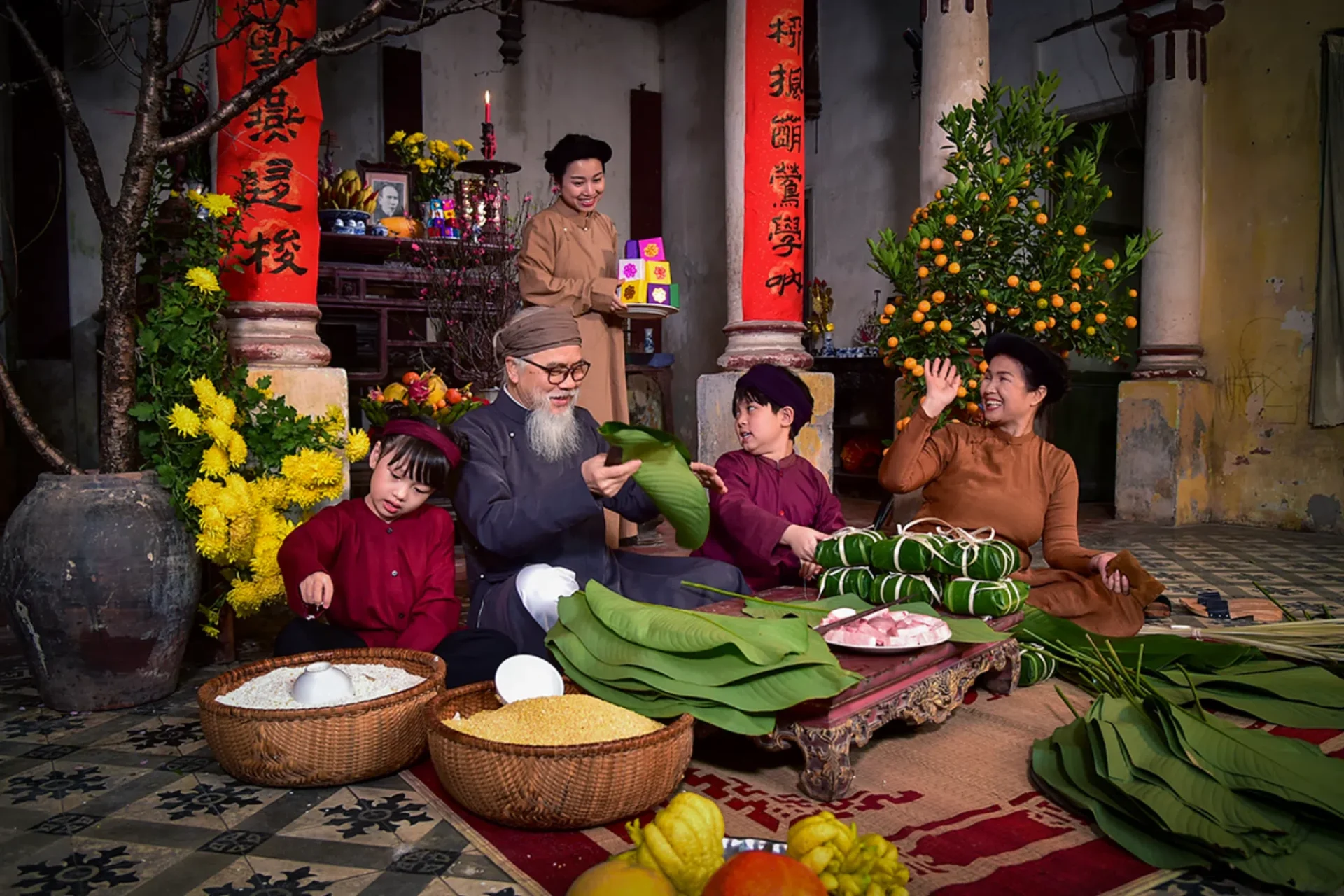
Tet, short for Tet Nguyen Dan, is the Lunar New Year. It is much more than just a calendar change; it focuses heavily on family reunions and ancestor remembrance. During this time, locals prepare traditional foods like Banh Chung (sticky rice cake), decorate their houses with peach or apricot blossoms, and give red envelopes containing lucky money to children and elders.
*[Image: A Vietnamese family gathering happily around traditional foods during the Tet holiday]*
3. Family and Respect for Elders Are Central to Vietnamese Culture
Family is a central part of Vietnamese culture, and respect for parents and older generations remains an important social value. Multi-generational family connections are highly prioritized. Filial piety dictates that younger family members care for their elders, creating strong family cohesion that travelers will easily notice in daily local life.
4. Ancestor Worship Is an Important Vietnamese Tradition
Ancestor worship is a vital Vietnamese tradition that is not tied to one specific religion. Most local homes feature an ancestral altar regardless of their faith. Significant holidays, death anniversaries, and the first and fifteenth days of the lunar month are critical times for families to burn incense and offer food to remember their ancestors.
5. Ao Dai Is Vietnam’s Iconic Traditional Dress
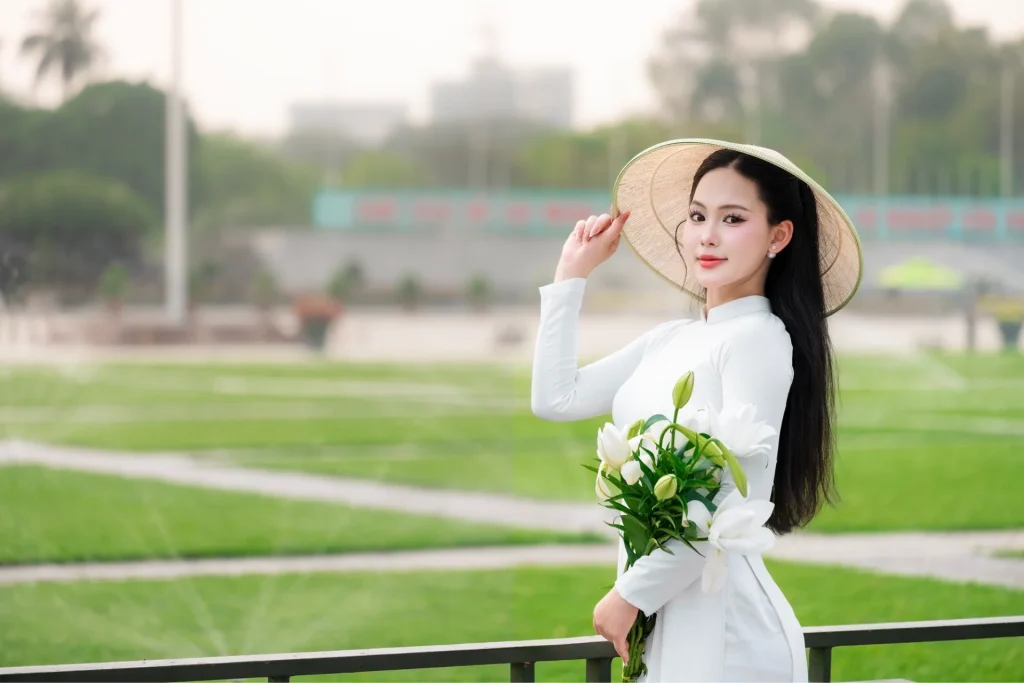
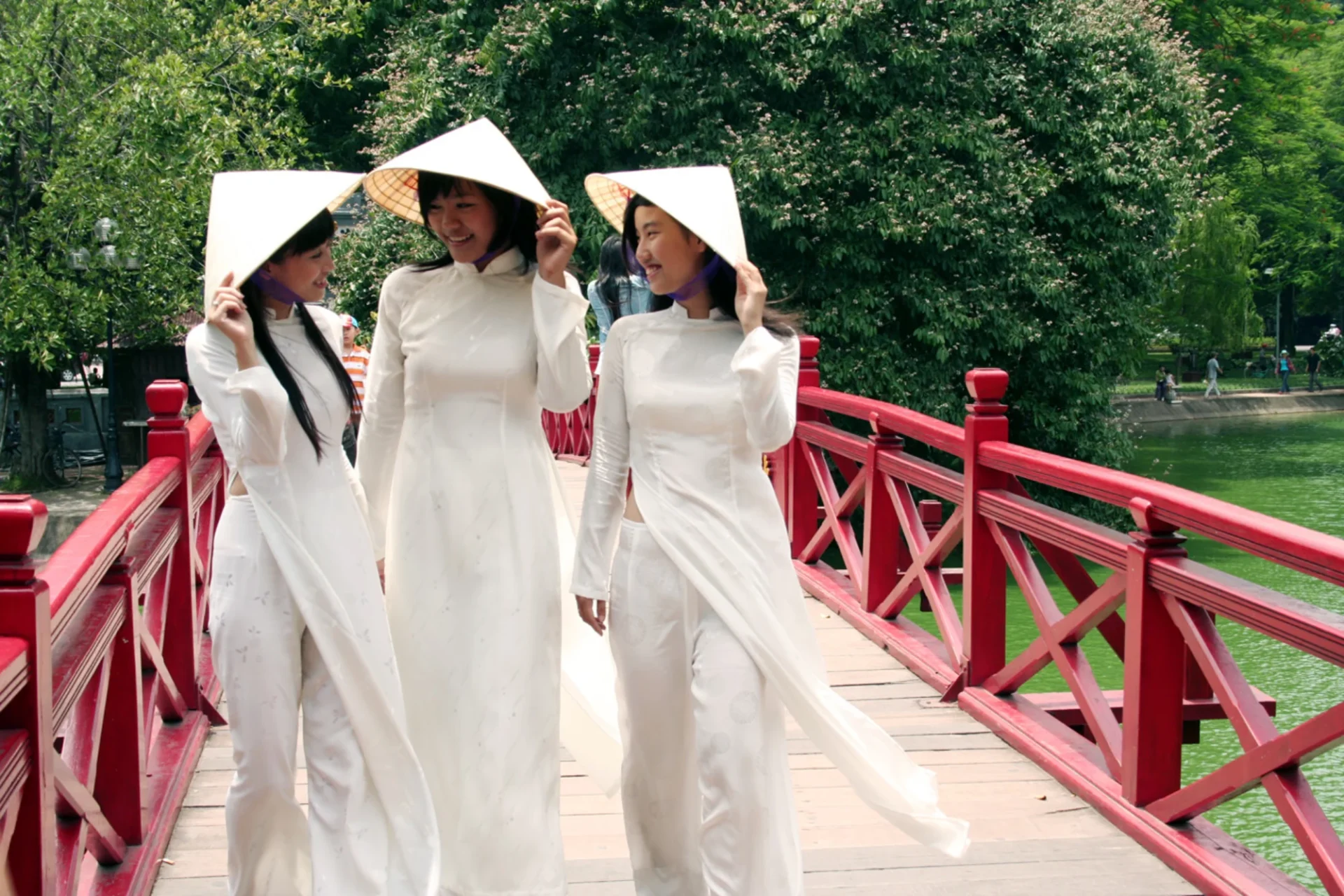
What is Vietnam’s traditional dress? Vietnam’s best-known traditional dress is the ao dai, a long, elegant tunic worn over trousers.
This iconic garment features slits on both sides, allowing for comfortable movement. You will frequently see the ao dai worn during formal ceremonies, wedding events, school functions, and national holidays.
6. Vietnamese Cuisine Is Different Across the Country
Food in Vietnam changes significantly depending on geography. Understanding this is essential for any culinary exploration.
| Region | Cultural food characteristics | Classic Examples |
| Northern Vietnam | More subtle and balanced flavors | Pho, Bun Cha |
| Central Vietnam | Stronger and often spicier flavors | Bun Bo Hue, Cao Lau |
| Southern Vietnam | Sweeter flavor profiles | Banh Xeo, Hu Tieu |
7. Sharing Food Is an Important Part of Vietnamese Dining Culture
Unlike Western dining where everyone orders an individual plate, sharing food is a fundamental part of Vietnamese dining culture. Dishes are placed in the center of the table, and everyone shares the meal using their own small bowl and chopsticks. This communal style emphasizes togetherness and hospitality.
8. Vietnamese People Have a Strong Sidewalk Culture
One of the most engaging Vietnam fun facts is the vibrant sidewalk culture. The pavement is a dynamic social space where locals gather to eat street food, drink coffee on small plastic stools, buy fresh goods from local markets, and even get haircuts. This daily social interaction is the heartbeat of Vietnamese city life.
9. Water Puppetry Is a Traditional Vietnamese Performing Art
What is Vietnam famous for in traditional performing arts? Water puppetry. Originating from the northern Red River Delta, this unique art features wooden puppets controlled on a waist-deep water stage. It combines traditional folk music with storytelling, often depicting rural life, agricultural harvests, and historical legends.
10. Vietnam Has a Long Tradition of Festivals
Festivals hold deep meaning regarding family, community, spirituality, and agricultural traditions. Some of the most notable include:
- Tet: The Lunar New Year celebration.
- Mid-Autumn Festival: A harvest festival focusing on children, lanterns, and mooncakes.
- Hung Kings’ Festival: Honoring the ancient founders of the nation.
- Kitchen God Festival: A ritual to send household deities to heaven before Tet.
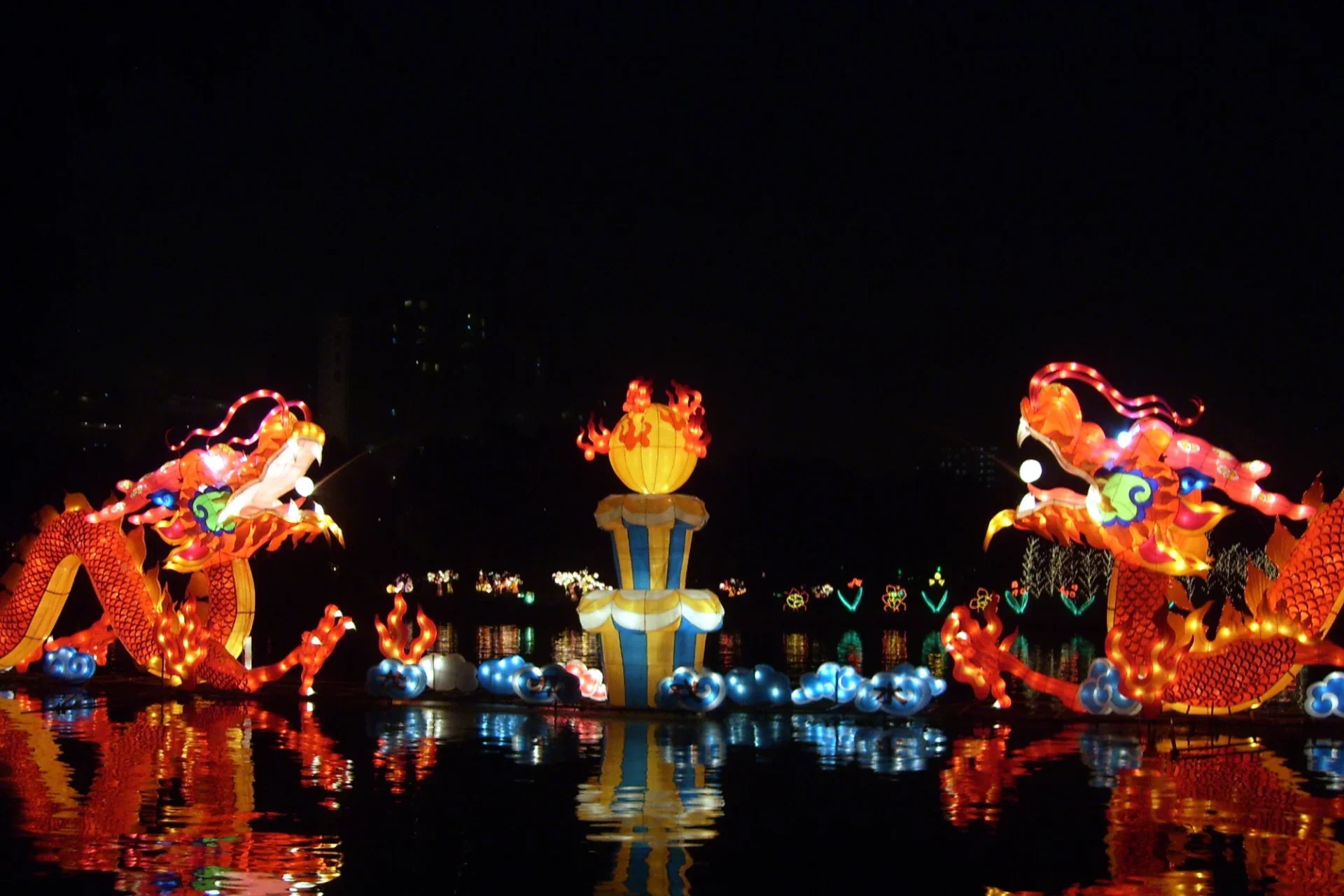
11. Vietnam’s Culture Has Been Shaped by Multiple Influences
Vietnamese culture has incredible depth due to a blend of various influences over centuries. It retains strong indigenous traditions while incorporating elements from Chinese philosophical influences, Buddhism, Confucianism, and Taoism. Additionally, French influence is visible in local architecture, coffee culture, and the popular Banh Mi sandwich.
12. Vietnam Has 8 UNESCO World Heritage Sites
For history and nature lovers, one of the most interesting facts about Vietnam is its impressive list of [UNESCO World Heritage Sites. As of current official records, there are 8 recognized sites:
- Ha Long Bay – Cat Ba Archipelago
- Trang An Landscape Complex
- Hoi An Ancient Town
- Complex of Hue Monuments
- My Son Sanctuary
- Thang Long Imperial Citadel
- Citadel of Ho Dynasty
- Phong Nha-Ke Bang National Park
13. Vietnam Is Home to Son Doong, One of the World’s Most Remarkable Caves
Located in Quang Binh province, Son Doong is celebrated globally as one of the largest natural caves on earth. Officially surveyed in 2009, this massive subterranean wonder even has its own localized weather system and internal jungle ecosystem.

14. Vietnamese Is a Tonal Language
Vietnamese uses tones to distinguish meaning, making it a fascinating linguistic challenge for foreigners. The language utilizes a Latin-based writing system, known as Quoc ngu, which includes specific diacritics (accent marks) to indicate the six different tones. A slight change in tone completely changes the definition of a word.
15. Vietnamese Culture Changes From North to South
Vietnam is not culturally identical from top to bottom. The geography spans over 1,600 kilometers, resulting in distinct regional characteristics.
| Area | Cultural characteristics |
| Northern Vietnam | Strong historical, traditional, and conservative influences |
| Central Vietnam | Imperial heritage, distinctive fiery cuisine, and strong weather resilience |
| Southern Vietnam | More tropical, open, and commercially diverse influences |
Frequently Asked Questions About Vietnamese Culture (FAQ)
1. Is Vietnam safe for senior and middle-aged foreign travelers?
Yes, Vietnam is considered one of the safest countries in Southeast Asia. The locals are exceptionally friendly and respectful to elders, and major cities offer reliable, modern medical facilities for tourists.
2. What is the best way to cross the street in Vietnam?
Walk at a steady, predictable pace and do not stop abruptly. Keep your eyes on the oncoming traffic, and the drivers will naturally adjust their speed to flow around you.
3. Do I need to tip in Vietnam?
Tipping is not strictly required by culture, but it is highly appreciated. It is common to leave a small tip for tour guides, drivers, and attentive service staff.
4. Can foreigners wear Ao Dai during their trip?
Absolutely. Vietnamese people are very proud of their traditional dress and enthusiastically welcome foreign visitors who choose to wear the Ao Dai while sightseeing or taking photos.
5. How should I dress when visiting temples and pagodas?
Modesty is required. Wear shirts with sleeves and ensure your trousers or skirts cover your knees. Always follow local signs, which may ask you to remove your shoes before entering main worship halls.
Conclusion
Understanding these facts about Vietnam provides a wonderful foundation for your upcoming journey. From the complex flavors of regional cuisine to the deep-rooted respect for family, the country offers a rich tapestry of experiences. Remember to verify seasonal weather and visa requirements before your departure to ensure a seamless trip.
If you prefer to travel without the stress of planning, explore our Vietnam Tour Packages. Nicetrips helps customers enjoy their trips easily, comfortably, and with peace of mind through carefully prepared, well-operated journeys and dedicated support. Let our local experts handle the logistics so you can simply focus on making memories.
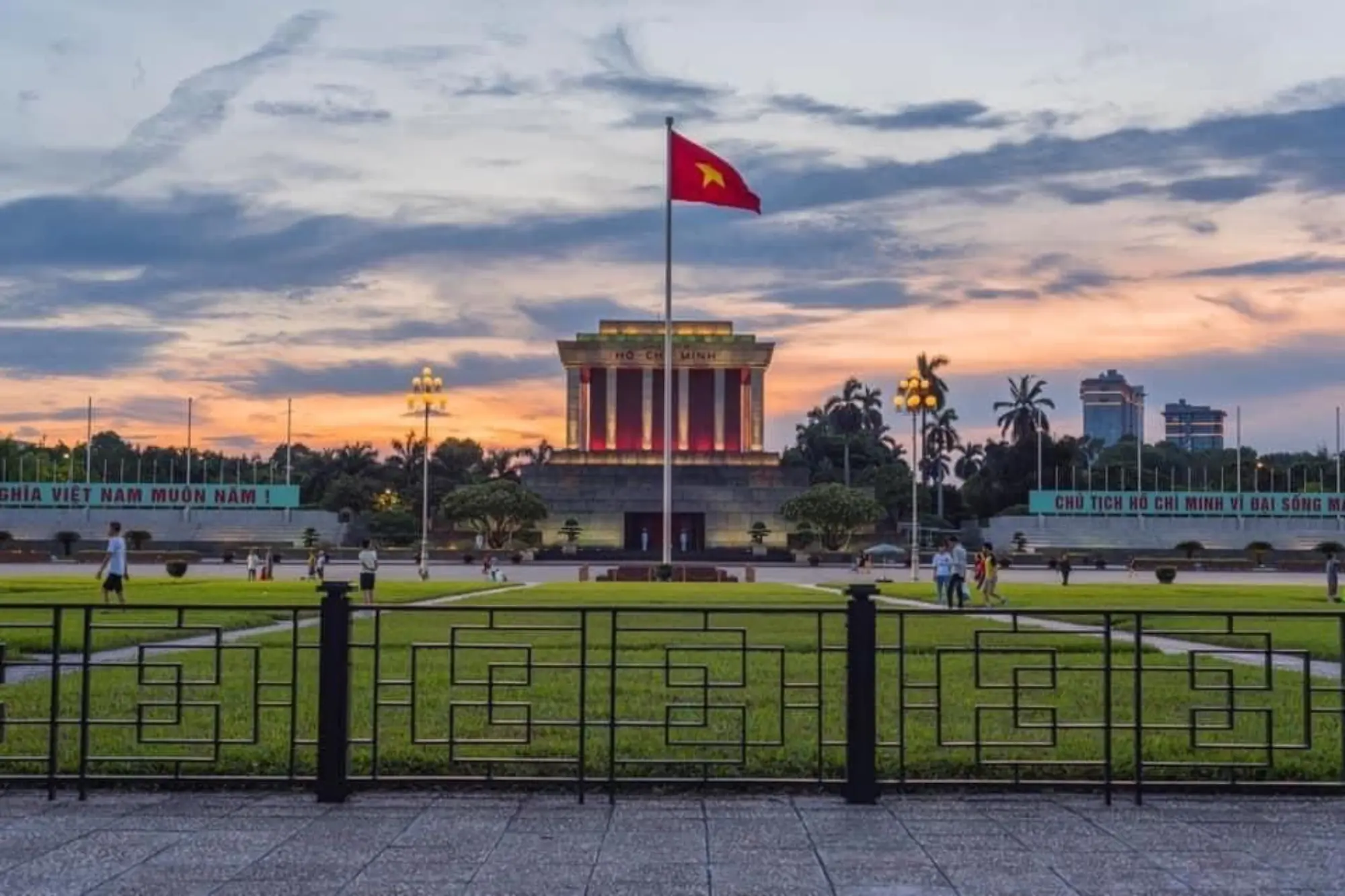
Best Things to Do in Hanoi go beyond visiting famous landmarks. Hanoi is a city where history, street life, food, coffee culture, local markets, and everyday routines come together. From walking around Hoan Kiem Lake and exploring the Old Quarter to trying local dishes and discovering neighborhood cafés, there are many ways to experience Hanoi beyond its well-known Hanoi tourist attractions. Whether you are planning your first Hanoi trip or creating a flexible Hanoi itinerary, this guide highlights 10 experiences that offer a closer look at the city’s culture and daily life.
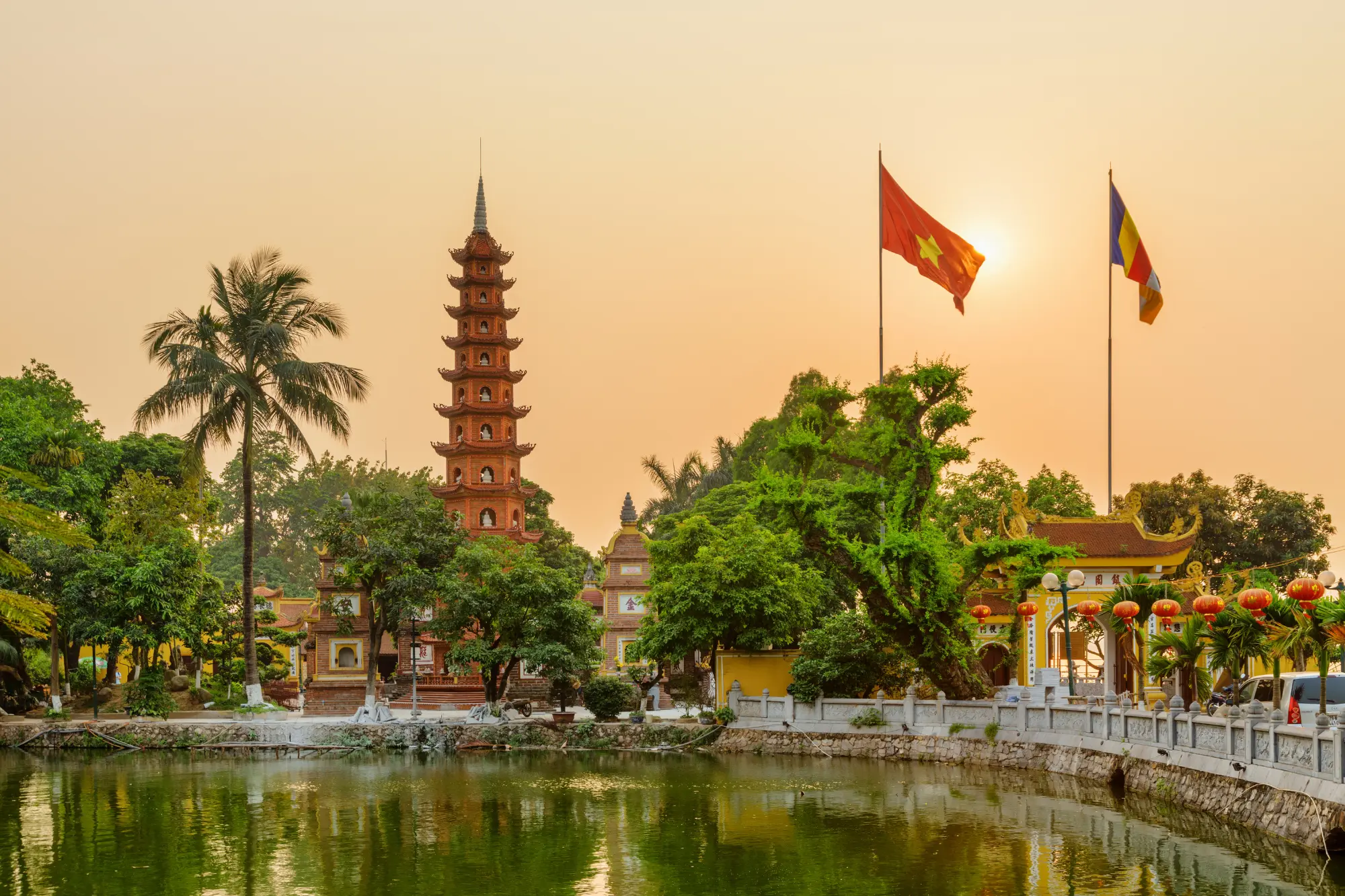
Why Experience Local Life in Hanoi?
Experiencing local life is one of the best ways to understand what makes Hanoi distinctive. Alongside its historic landmarks and cultural heritage, the city is shaped by everyday moments that take place on its streets and sidewalks. Exploring the Old Quarter, having coffee at a neighborhood café, browsing local markets, or stopping at a small food stall allows travelers to observe Hanoi’s daily rhythm at their own pace. Rather than filling your Hanoi itinerary with one attraction after another, leave time to walk, eat, sit, and simply watch the city around you. For travelers planning Hanoi trips, experiencing the city like a local can be just as rewarding as visiting its most famous Hanoi tourist attractions.
10 Best Things to Do in Hanoi to Experience Local Life
1. Experience Hanoi’s Morning Life Around Hoan Kiem Lake
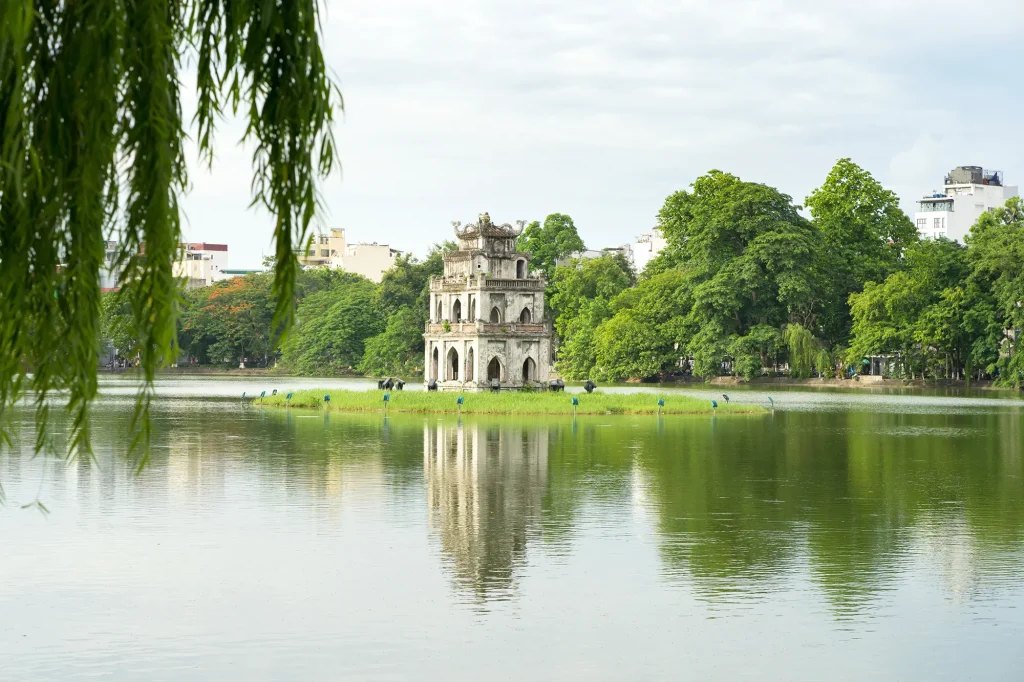
Hoan Kiem Lake is more than one of the city’s best-known Hanoi tourist attractions. Early in the morning, the area becomes a lively part of everyday Hanoi, with locals walking, exercising, and meeting friends. For first-time visitors, spending time here at the start of the day is an easy way to experience the city beyond traditional sightseeing.
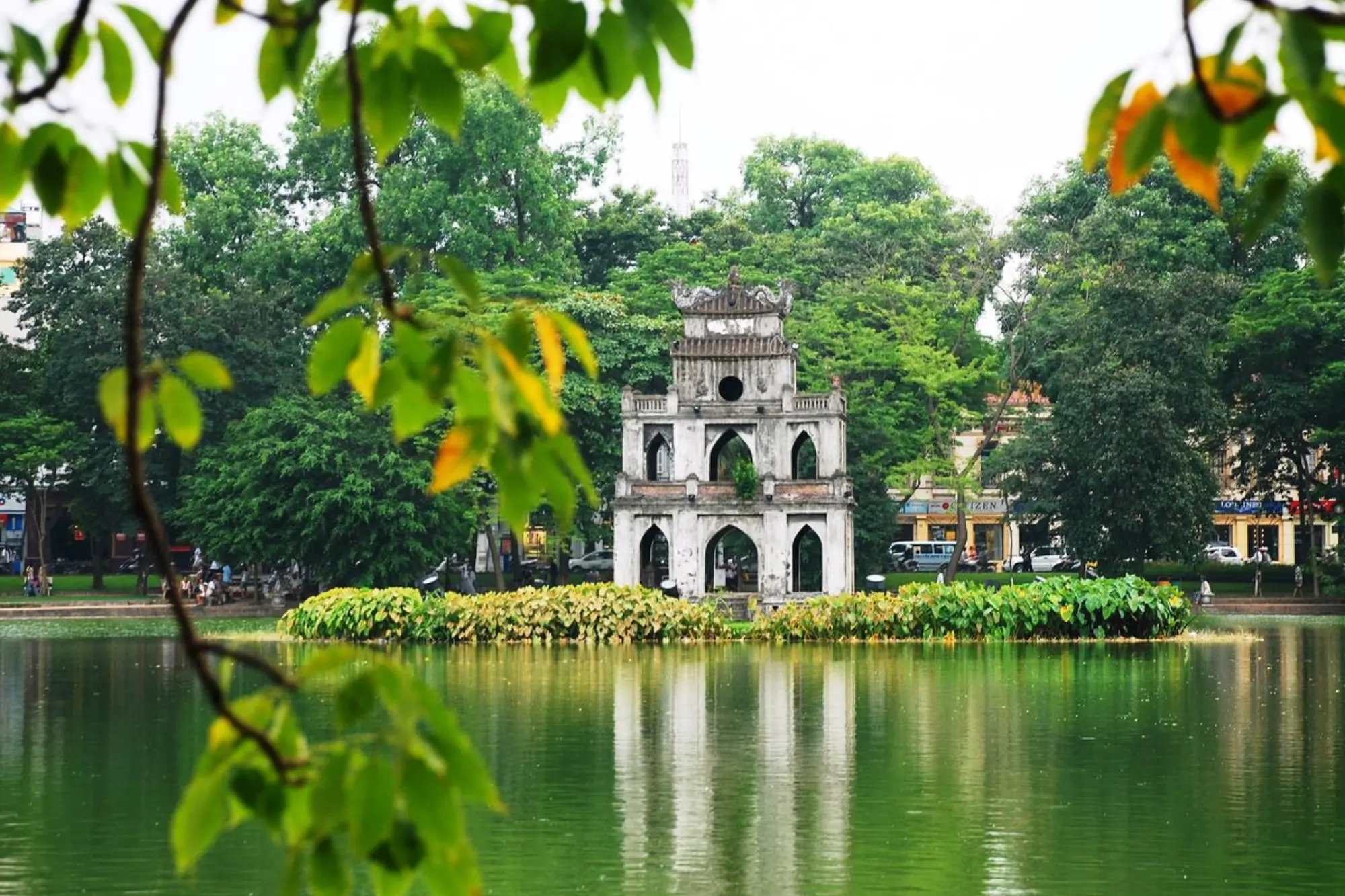
Best time: Visit around sunrise, when the weather is cooler and local activities are most visible. The lake is also pleasant in the late afternoon, when people return for walks and social activities.
Take a relaxed walk around the lake, cross the red Huc Bridge to Ngoc Son Temple, and explore the streets connecting the lake with the Old Quarter. You can also turn the experience into a simple morning routine of Hanoi trips: walk by the lake, enjoy a local breakfast, then continue sightseeing on foot.
Travel tip: Allow around 1-2 hours rather than treating Hoan Kiem Lake as a quick photo stop. It is also a convenient starting point for a Hanoi itinerary because many Old Quarter attractions are within walking distance.
2. Wander Through Hanoi’s Old Quarter
The Old Quarter is where Hanoi’s history and everyday street life come together. Its historic network of 36 streets was traditionally associated with different trades, and many streets still retain their distinctive character, traditional shop houses, small businesses, temples, cafés, and food stalls.
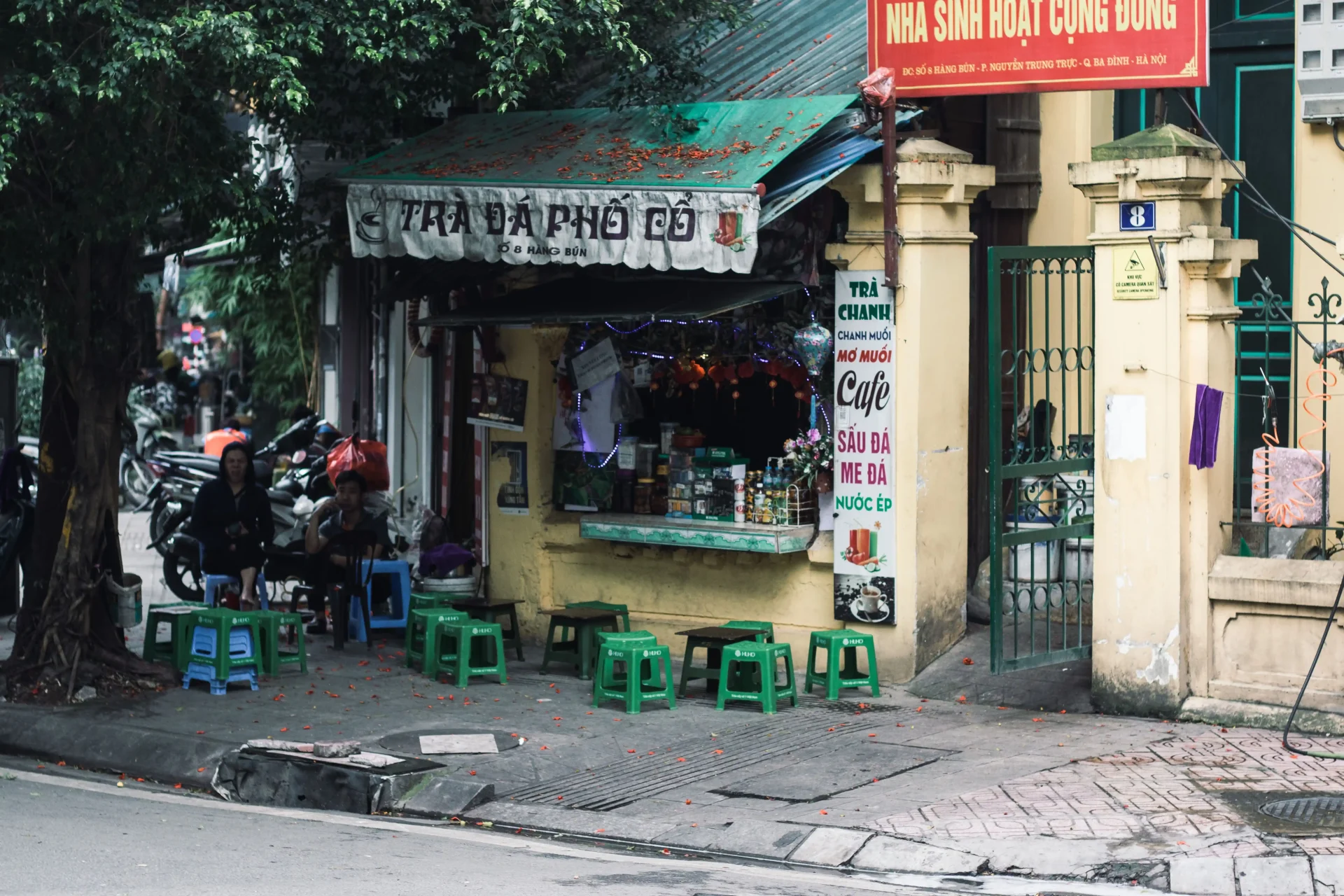
Rather than trying to visit every street, choose a few areas and explore them slowly. Hang Bac, Hang Gai, Hang Ma, Hang Buom, and Ma May are good places to see different sides of the neighborhood, from traditional crafts and shops to heritage buildings and local eateries.
Best time: Early morning is quieter and cooler, while late afternoon and evening bring more energy to the streets. A leisurely walk can take around 2-3 hours, depending on how often you stop.
Travel tip: Leave some space for spontaneous discoveries. A small café, an old temple, or a busy food stall can be just as memorable as the major Hanoi tourist attractions on your list.
3. Watch the Flag-Raising or Flag-Lowering Ceremony at Ba Dinh Square
For a more meaningful cultural experience, head to Ba Dinh Square to witness the flag-raising or flag-lowering ceremony in front of the Ho Chi Minh Mausoleum. The atmosphere here is very different from the lively Old Quarter, offering visitors a glimpse into an important part of Vietnam’s national and cultural life.
The ceremony can also be combined with other sites in the Ba Dinh area, including the Ho Chi Minh Mausoleum Complex and One Pillar Pagoda. This makes it a practical addition to an Hanoi itinerary focused on history and culture.
Best time: The ceremonies are held in the morning and evening, but schedules and access arrangements can change. Check the latest local information before planning your visit.
Travel tip: Dress respectfully and follow instructions around the ceremonial area. Treat the experience as a cultural moment rather than simply another sightseeing opportunity.
4. Start Your Day With a Traditional Hanoi Breakfast
Food is one of the easiest ways to experience Hanoi’s local rhythm. Early in the morning, small eateries and street-side restaurants fill with people stopping for breakfast before work. Instead of beginning your Hanoi trip with a hotel breakfast, start the day at a local food spot and experience how Hanoians enjoy some of the city’s most familiar dishes. Classic choices include pho, bun cha, banh cuon, and xoi.
Some places to try:
- Pho Gia Truyen Bat Dan – 49 Bat Dan Street, a well-known choice for traditional Hanoi pho, with recent prices around 60,000-80,000 VND per bowl.
- Banh Cuon Gia Truyen Thanh Van – Hang Ga Street, known for freshly steamed banh cuon, around 40,000-60,000 VND.
- Xoi Yen – Nguyen Huu Huan Street, a popular option for xoi xeo, with servings around 30,000-60,000 VND.
Best time: Go in the morning when local breakfast spots are busiest and dishes are freshly prepared.
Travel tip: Look for small eateries with a steady flow of local customers. You don’t need to choose the most famous restaurant to enjoy an authentic breakfast experience. Also, carrying some small cash notes is useful because many small street-food stalls still prefer cash.
5. Slow Down With Hanoi’s Coffee Culture
Hanoi’s coffee culture is an experience in itself. Traditional cafés remain part of everyday city life, while newer cafés have introduced modern styles and spaces. For travelers, sitting down with a Vietnamese coffee is also a chance to slow down between Hanoi tourist attractions and observe the streets around you.
The Old Quarter is particularly convenient for exploring Hanoi’s café scene. Try egg coffee (ca phe trung), Vietnamese drip coffee made with a phin filter, or iced coffee with condensed milk. Egg coffee is especially associated with Hanoi, with Café Giang widely recognized as the drink’s birthplace in 1946.
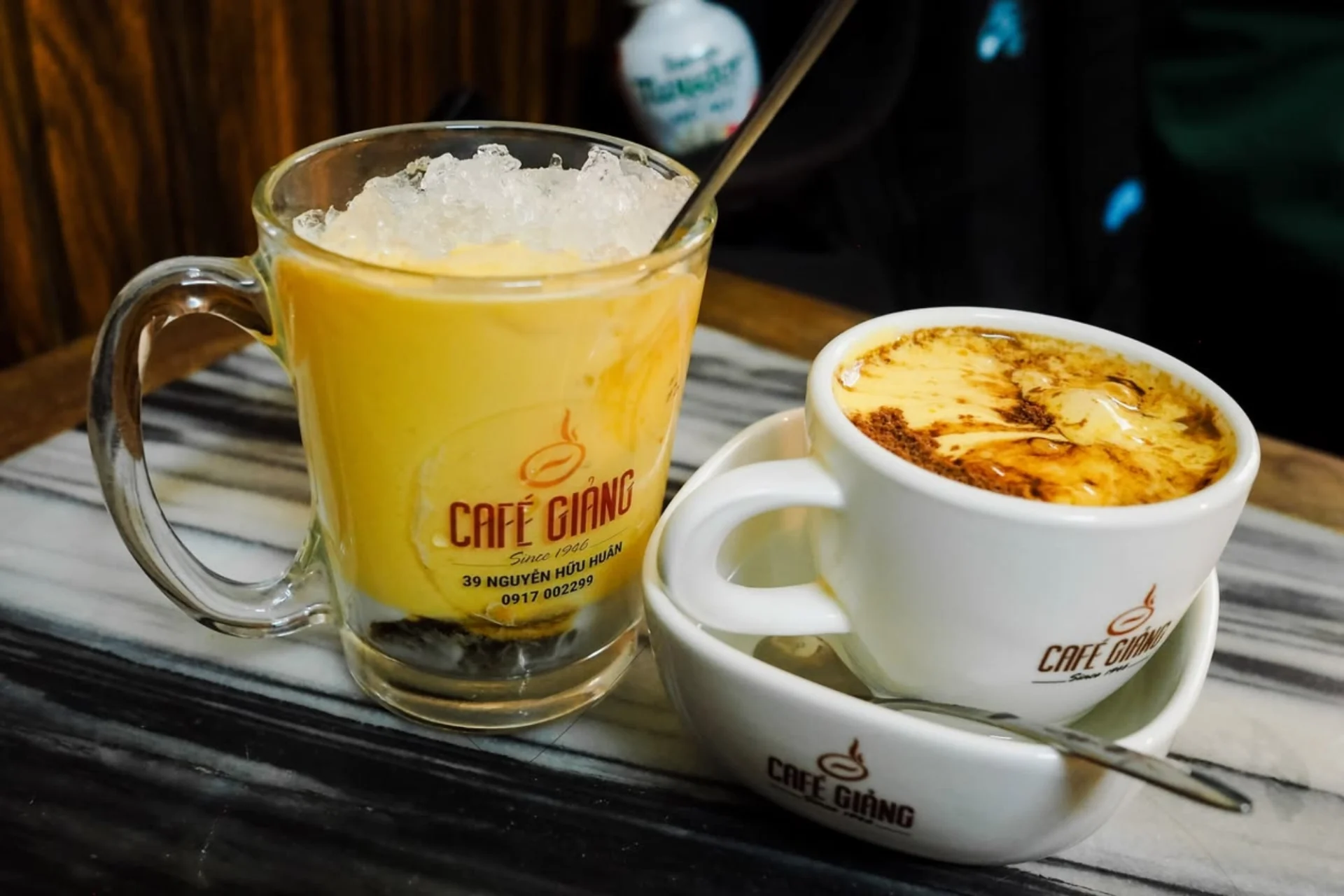
Places to try:
- Café Giang: 39 Nguyen Huu Huan Street, Hoan Kiem and a general price range of around 35,000-60,000 VND.
- Café Pho Co: 11 Hang Gai Street, Hoan Kiem. A good option for combining coffee with a view over Hoan Kiem Lake and the Old Quarter.
Best time: Morning is ideal for combining coffee with breakfast, while afternoon works well as a slower break during sightseeing.
Travel tip: Don’t rush your coffee. Part of the experience is sitting, watching the streets, and enjoying the atmosphere. A café stop can easily become one of the most memorable parts of your Hanoi itinerary.
6. Explore Hanoi’s Traditional Markets
Hanoi’s markets offer a different perspective on local life, where shopping, food, and everyday routines happen alongside the city’s historic streets. Dong Xuan Market, in the heart of the Old Quarter, is one of the city’s best-known traditional markets, with stalls selling everything from clothing and fabrics to household goods, snacks, and souvenirs. The surrounding alleys are also part of the experience, with smaller businesses and local vendors continuing beyond the main market building.
Best time: Visit during the daytime to explore the market at a relaxed pace. For a more atmospheric experience, Long Bien Market becomes particularly active late at night and in the early morning as fresh produce arrives for restaurants and smaller markets across Hanoi.
Take some time to browse the stalls, explore the surrounding streets, and observe how vendors and local shoppers interact. You don’t have to buy anything the market itself is an interesting part of the Best Things to Do in Hanoi for travelers who want to see everyday city life.
Travel tip: Don’t limit your visit to the main market building. The smaller streets and alleys around Dong Xuan can be just as interesting and are easy to combine with an Old Quarter walking route.
7. Step Into Hanoi’s Cultural Heritage at the Temple of Literature
The Temple of Literature offers a quieter side of Hanoi, with traditional courtyards, gardens, stone stelae, and distinctive Vietnamese architecture. Built in 1070 and later home to Quốc Tử Giám, Vietnam’s first university, the site has long been associated with education and scholarship. Today, it remains one of the city’s most important cultural Hanoi tourist attractions.
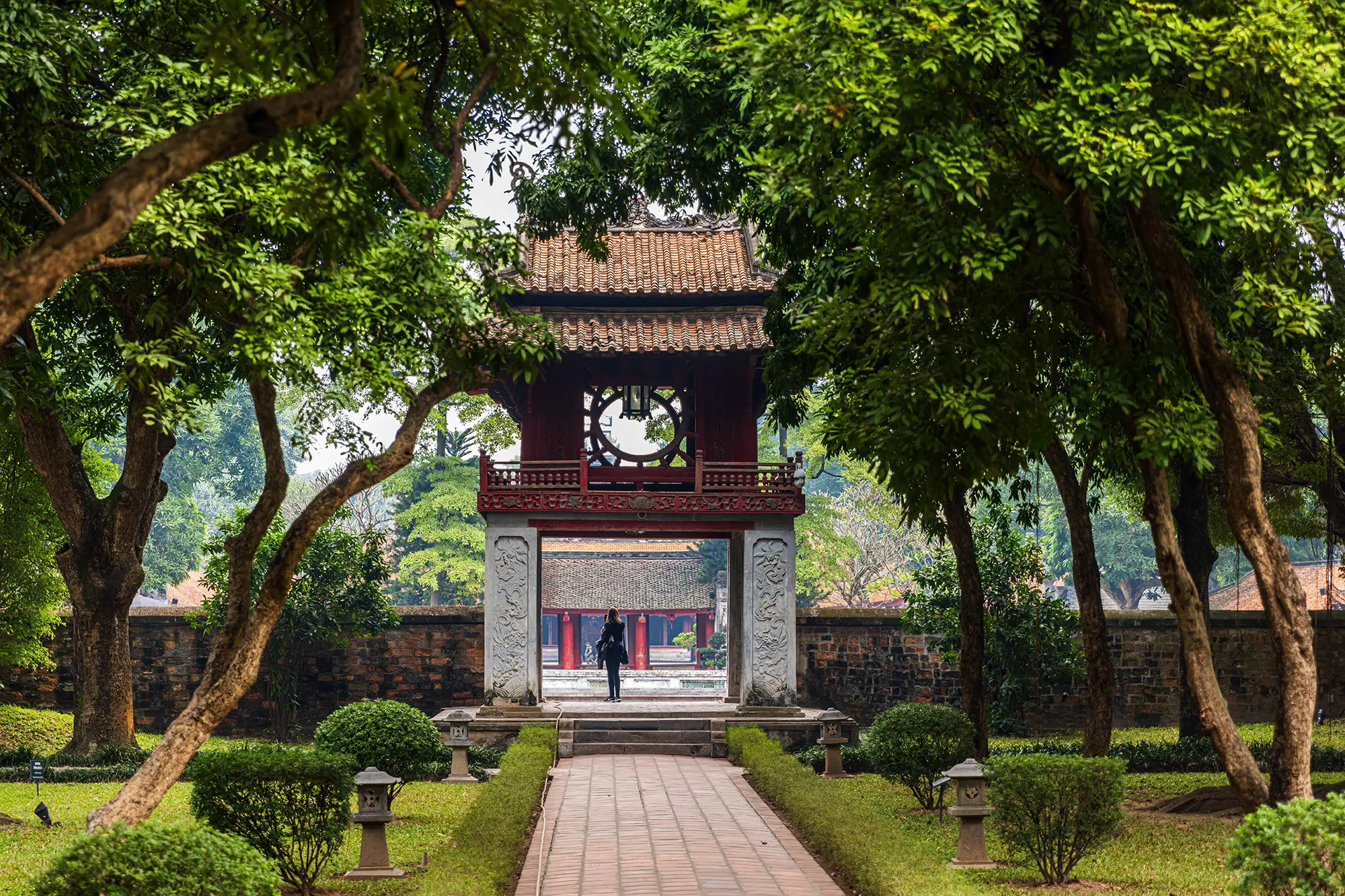
Best Time to Visit: Visit in the early morning or late afternoon for a more comfortable, cooler experience.
Opening Days: Open Tuesday to Sunday (Closed on Mondays).
Operating Hours: 7:30 AM – 5:30 PM
Address: Imperial Citadel of Thang Long, 19 Hoang Dieu Street, Quan Thanh, Ba Dinh, Hanoi.
Entrance Fee: 70,000 VND per person (according to official destination guides).
Rather than simply taking photos at the main gate, walk through the five courtyards, look at the traditional architecture, and learn about the scholars commemorated by the stone stelae. The peaceful atmosphere makes it a useful break from the traffic and crowds elsewhere in Hanoi.
Travel tip: Pair the Temple of Literature with other cultural sites in the area rather than trying to fit it between too many distant attractions. It works particularly well in a history-focused Hanoi itinerary.
8. Discover Hanoi’s History at Hoa Lo Prison Museum
Hanoi’s local character is also shaped by its complex history, and Hoa Lo Prison Museum provides a more reflective experience than the city’s food streets and lively markets. Originally built during the French colonial period as Maison Centrale, the remaining prison structures have been preserved as a museum documenting different chapters of Vietnam’s modern history.
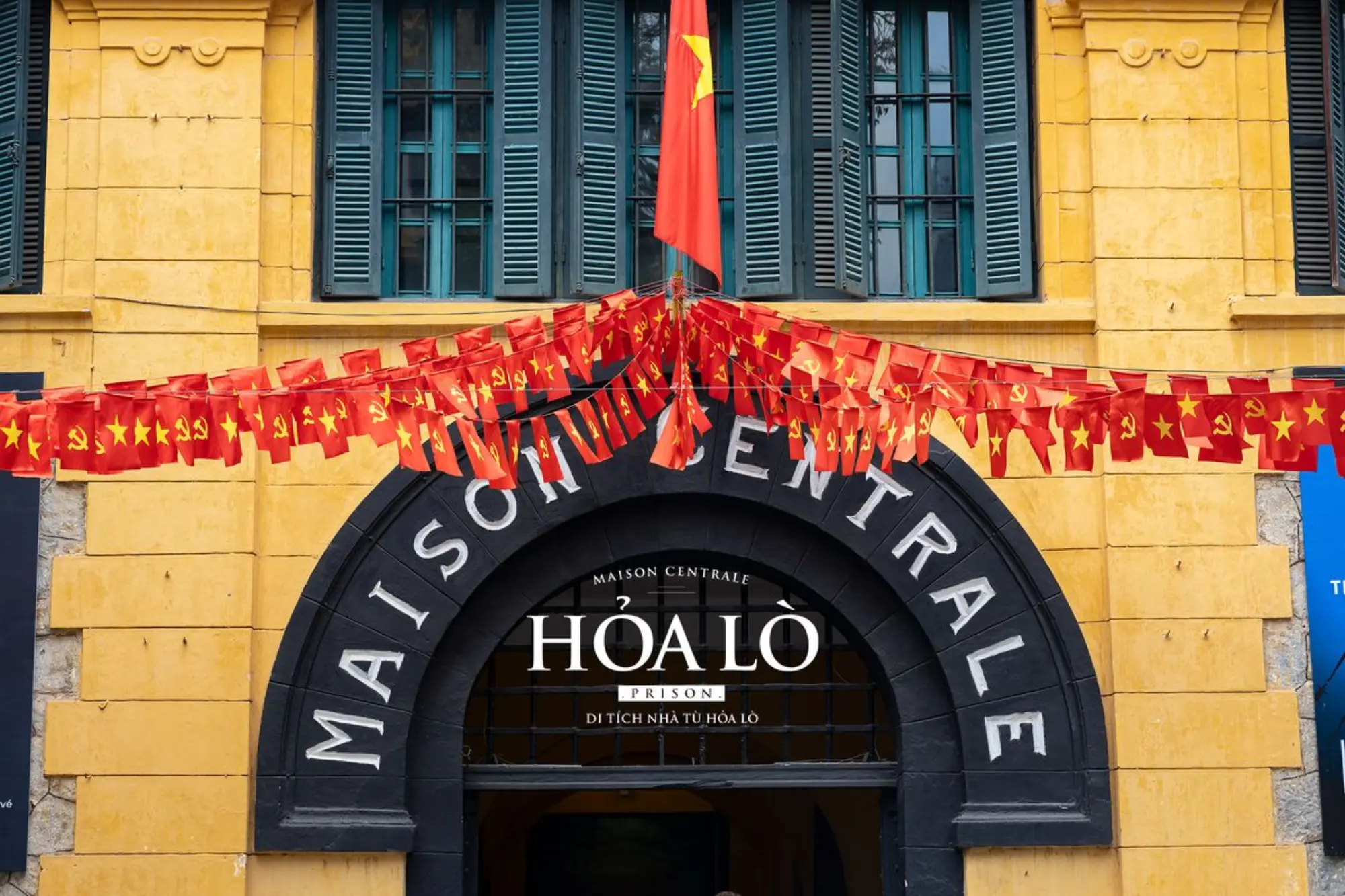
Allow enough time to explore the exhibits and understand the stories behind the site rather than treating it as a quick stop between other Hanoi tourist attractions. For visitors interested in history, it can add important context to the city and make a Hanoi trip feel more meaningful.
The museum has also offered an immersive night experience focused on the lives of prisoners during the French colonial period. The official tourism source describes the night tour as a 90-minute experience running on Friday, Saturday, and Sunday evenings; availability and schedules should be checked before booking.
Address: No. 1 Hoa Lo Street, Cua Nam Ward, Hanoi.
Opening hours: 8:00 AM-5:00 PM
Admission: 50,000 VND per person. Students, seniors, and several eligible groups receive 50% off, while children under 16 can enter free.
Travel tip: Visit during the daytime if you prefer to explore independently at your own pace. Consider the night experience only when it is available and suits your itinerary.
9. Taste Hanoi Street Food After Dark
Hanoi becomes especially lively after sunset, when small restaurants, food stalls, and sidewalk eateries fill the streets. For travelers who want to experience local life, an evening food walk can be more rewarding than simply choosing one restaurant and staying there for the entire night.
The Old Quarter is a convenient place to explore Hanoi’s food scene, with plenty of opportunities to try local dishes and snacks while walking between different streets. You can sample familiar favorites such as bun cha, pho, banh cuon, or smaller street snacks, then stop for a drink or dessert along the way.
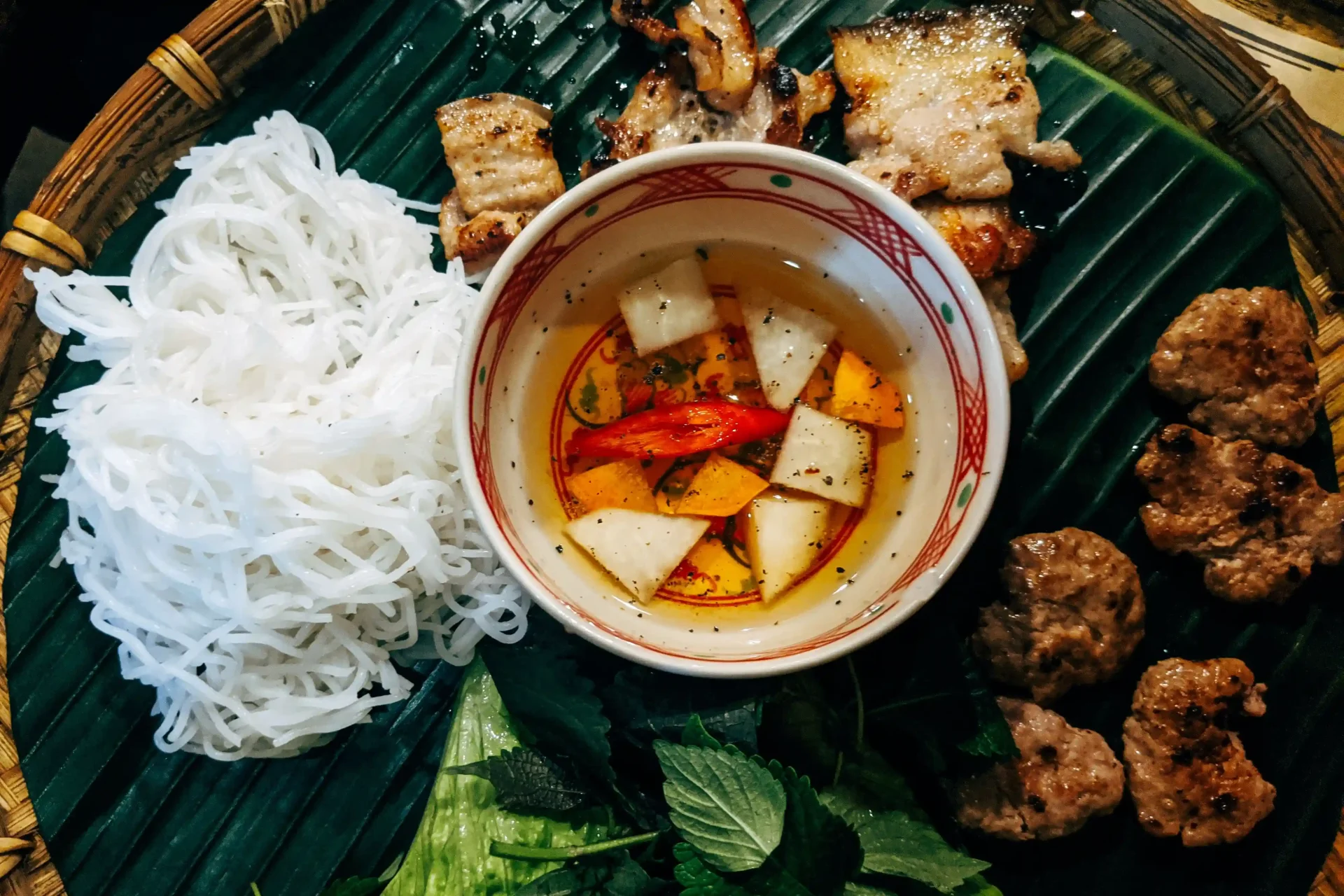
Best time: Start around early evening and allow a couple of hours to explore at a relaxed pace.
The experience is as much about the atmosphere as the food. Sitting on a small plastic stool, watching vendors prepare dishes, and seeing locals gather for dinner gives you a much closer look at everyday Hanoi.
Travel tip: Instead of planning every food stop in advance, choose a few dishes you want to try and leave room for spontaneous discoveries. A local food tour can also be a convenient option for travelers who want to try several dishes while learning more about Hanoi’s food culture.
10. Experience Hanoi’s Evening Streets Like a Local
After spending the day exploring museums, temples, and markets, leave some time to simply walk through Hanoi after dark. The streets around Hoan Kiem Lake and the Old Quarter take on a different atmosphere in the evening, with pedestrians, street vendors, cafés, shops, and social activities bringing the city to life.
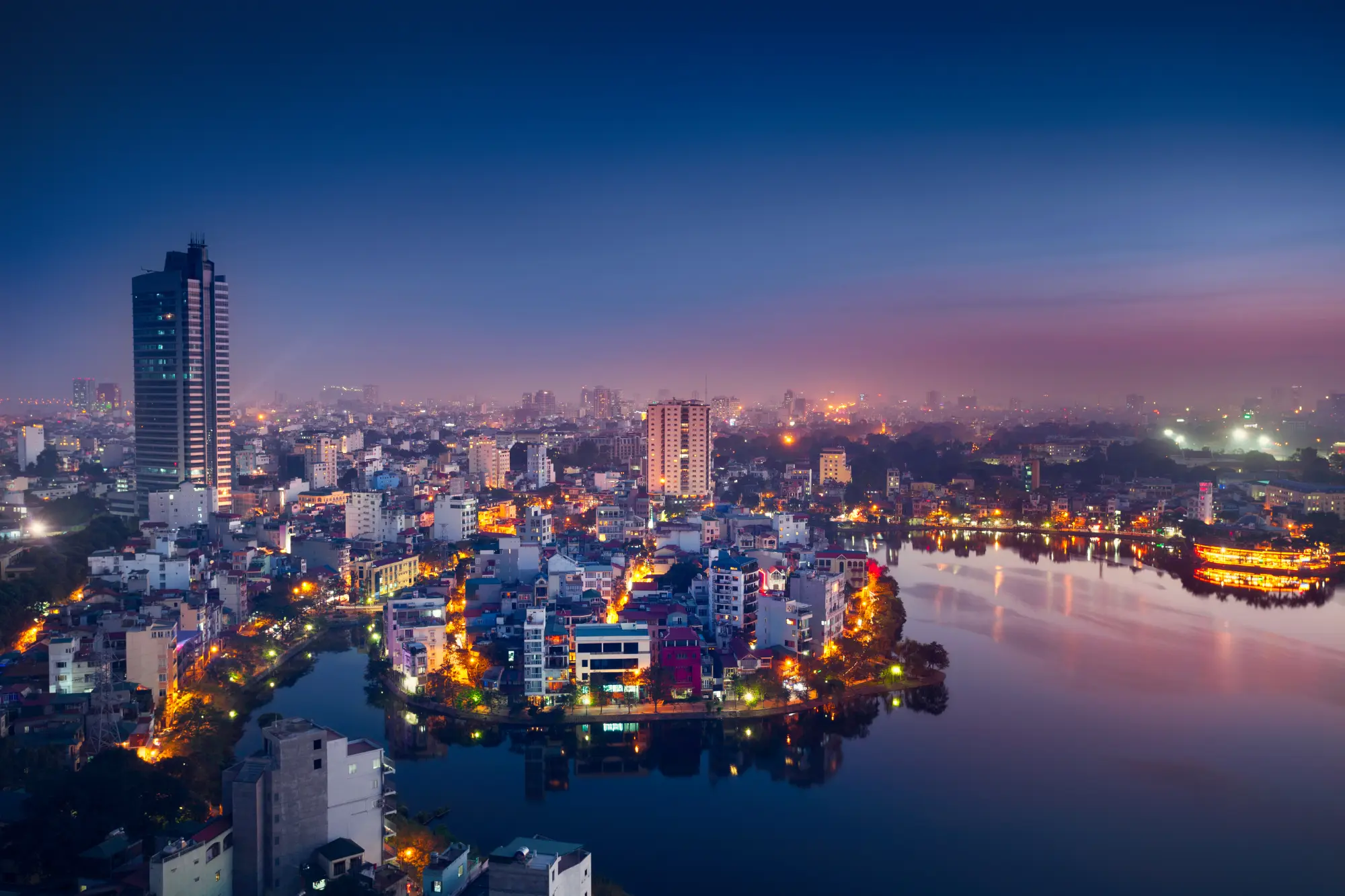
Best time: Late afternoon through evening is ideal. On weekends, the pedestrian areas around Hoan Kiem become particularly suitable for walking and observing the city’s evening atmosphere.
You can take a leisurely walk around the lake, explore the Old Quarter, browse small shops, stop at a café, or simply find a spot to watch the streets. For travelers building a Hanoi itinerary, this is an easy experience to add without needing a complicated booking or fixed schedule.
Travel tip: Don’t over-plan your final evening. Leave a few hours open and let the streets guide you. Sometimes an unplanned walk, a small café, or a local snack becomes one of the most memorable parts of a Hanoi trip.
How to Fit These Experiences Into a Hanoi Itinerary
You do not need to follow a packed schedule to experience the best things to do in Hanoi. Grouping nearby experiences together allows you to spend less time traveling between attractions and more time exploring the city’s streets, food, cafés, and local neighborhoods.
| Time | Suggested Experience |
| Early morning | Hoan Kiem Lake + local breakfast |
| Morning | Old Quarter + Temple of Literature |
| Midday | Local lunch + Vietnamese coffee |
| Afternoon | Ba Dinh area + Hoa Lo Prison Museum |
| Late afternoon | Dong Xuan Market + neighborhood walk |
| Evening | Street food + Hoan Kiem walking area |
For most first-time visitors, the 2 days itinerary offers a good balance between sightseeing and slower experiences, giving you enough time to explore Hanoi without turning your Hanoi itinerary into a checklist.
Frequently Asked Questions About the Best Things to Do in Hanoi
- What are the best things to do in Hanoi for first-time visitors?
Explore Hoan Kiem Lake and the Old Quarter, try local food and coffee, visit Hanoi’s cultural landmarks, and spend time experiencing the city’s street life.
- How many days do you need for a Hanoi trip?
Two to three days is ideal for combining major Hanoi tourist attractions with food, coffee, markets, and slower local experiences.
- What should I include in a Hanoi itinerary?
A balanced Hanoi itinerary can include Hoan Kiem Lake, the Old Quarter, Ba Dinh Square, the Temple of Literature, Hoa Lo Prison Museum, local markets, street food, and Hanoi’s coffee culture.
- What is the best time to experience Hanoi like a local?
Early mornings and late afternoons are particularly enjoyable for experiencing local routines, walking around the city, and exploring Hanoi’s food and café culture.
- How can I avoid a touristy experience in Hanoi?
Explore beyond the main Hanoi tourist attractions, eat at local eateries, visit traditional markets, walk through smaller streets, and leave some free time instead of following a completely packed itinerary.
Conclusion
The Best Things to Do in Hanoi are not limited to checking famous landmarks off your sightseeing list. From watching the city wake up around Hoan Kiem Lake and wandering through the Old Quarter to enjoying a traditional breakfast, discovering Hanoi’s coffee culture, and exploring its historic sites, each experience offers a different way to understand the capital’s character. The city’s food, streets, markets, and everyday routines are often what make Hanoi trips truly memorable.
Whether you are planning a short visit or building a longer Hanoi itinerary, leave some room for slow exploration and spontaneous discoveries. A well-planned trip can combine the city’s essential Hanoi tourist attractions with authentic local experiences, giving you a more complete picture of Hanoi beyond the usual sightseeing route. Explore Nicetrips’ Vietnam packages Tours for thoughtfully designed journeys that combine Vietnam’s highlights with authentic local experiences. You can also explore the Nicetrips blog for more destination guides, travel inspiration, and practical tips for planning your Vietnam adventure.